

Delicious natto: 25% fewer heart and stroke deaths
Evidence check, October 21, 2026
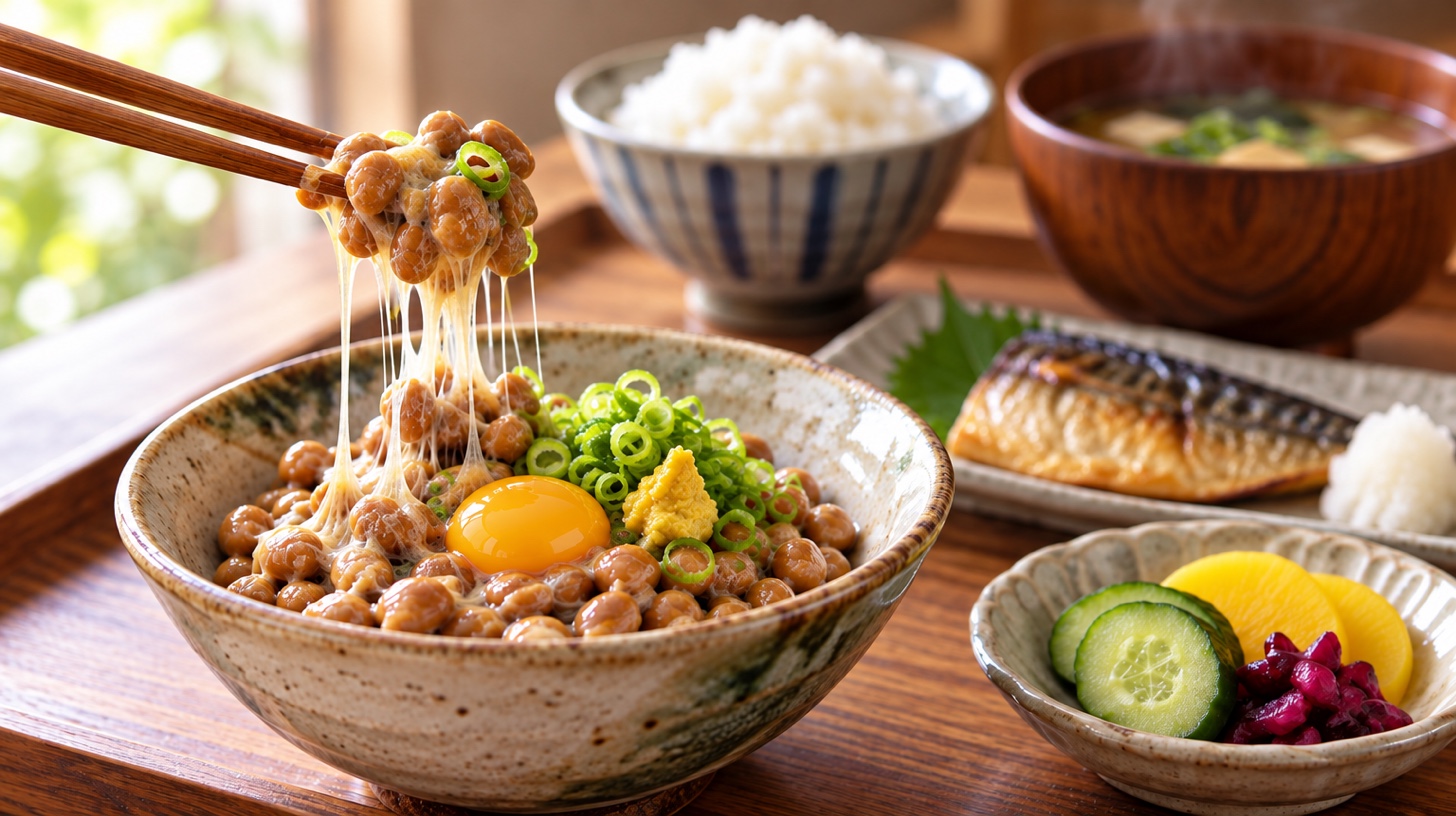
The claim: "Natto is good for your heart: people who eat it have about a quarter fewer deaths from heart disease and stroke."
Our grade: Promising. Two large Japanese studies found 21% to 25% fewer heart and stroke deaths in natto eaters, and soy and miso showed no such link. Natto's vitamin K2 slowed artery calcium in two 2026 trials. The nattokinase pill failed its best trial, and no trial has tested natto itself.
The first time I really liked natto was at a friend's grandmother's house in Kyoto. She stirred it with a raw quail egg, chopped negi (Japanese green onion), mustard and tare, the sweet soy sauce that comes in the pack, and served it over rice with the rest of a Japanese breakfast. The beans pulled up long, sticky strings. Many people say natto smells like sweaty socks, and the chemistry backs them up: its smell comes from branched fatty acids such as isovaleric acid [14], the same compound behind strong foot odor [15].
So is it worth it for your heart?
In a Japanese study that followed 92,915 adults for 15 years, people who ate natto died of heart disease and stroke about a fifth to a quarter less often than people who never ate it [2]. People who ate a lot of other soy did not [2].
Where the claim came from
Natto is soybeans fermented by a bacterium, Bacillus subtilis natto, and the bacterium makes two things now sold as pills.
One is nattokinase, an enzyme that breaks down fibrin, the protein mesh of a blood clot. Nick Norwitz, a doctor and researcher, wrote about it in December 2025 under the heading "High-Dose Nattokinase Reverses Atherosclerosis", citing a study where plaque shrank 36%; he noted that study had no control group [1, 9].
The other is vitamin K2, in a form called MK-7. Rhonda Patrick named natto as its food source in a 2022 talk with the biochemist Bruce Ames, who said natto eaters "get less heart disease" [1]. In October 2026 a Physionic video on a new K2 trial reached 125,000 views; calcification slowed, it said, but there are "no randomized controlled trials ... that look at cardiovascular disease outcomes" [1]. The doctor Brad Stanfield draws the line between food and pill: no trial shows nattokinase clears blockages, but "the food can absolutely be part of a healthy diet" [1].
So if natto helps, is it the enzyme, the vitamin, or something else about the people who eat it?
What the studies found
Natto, not soy
The Japan Public Health Center study asked 92,915 adults aged 45 to 74 what they ate, then followed them for 14.8 years [2]. It is observational: nobody was told what to eat. After adjusting for smoking, alcohol, weight, exercise, diabetes and the rest of the diet, men in the top natto group died of heart disease and stroke 24% less often than men who never ate natto, and women 21% less often [2].
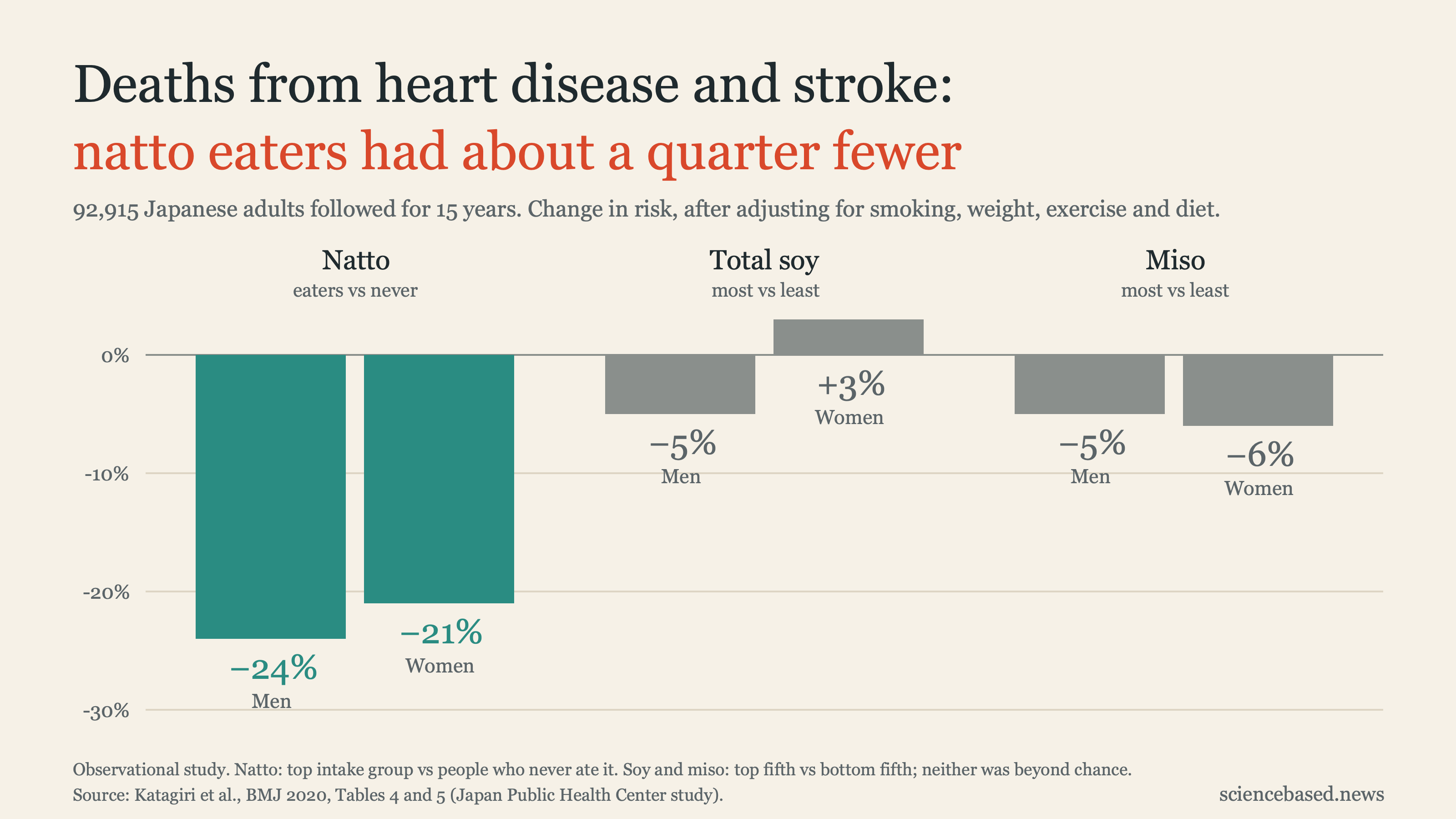
The surprise is what didn't count. Total soy (tofu, soy milk, miso and the rest) showed no link with heart and stroke deaths: 5% lower in men, 3% higher in women, both within chance [2]. Miso, also fermented soy, showed none either. Whatever is doing this is in natto and not in soybeans.
A second study, in Takayama city, followed 29,079 adults for 16 years and found the same thing [3]. The quarter who ate the most natto had 25% fewer deaths from heart disease and stroke than the quarter who ate none, and 32% fewer stroke deaths. Soy from other foods showed no clear link. And the top quarter ate a median of only 7.3 g a day: about one pack a week.
In the Japan Public Health Center study, men in the top natto group ate more than 26 g a day, about half a pack [2]. Heart disease deaths alone fell 29% in those men; stroke deaths alone fell 33% in women. Each sex's other result pointed the same way but was within chance. The study was paid for by Japan's National Cancer Center and its health ministry.
In Takayama [3], ischemic stroke, the kind caused by a clot, was 33% lower. Leaving out deaths in the first 4 years, when people already sick might have stopped eating natto, gave the same 25%. The study was paid for by Japan's education ministry.
Natto has two things soy and miso lack: the K2 and the enzyme. The trials tested each one.
The vitamin in the pack
Vitamin K2 switches on matrix Gla protein, a protein in the artery wall that stops calcium from settling there. Natto is by far the richest food source: about 400 to 500 µg of MK-7 in a 40 to 50 g pack [10]. After one serving, MK-7 in the blood rose eightfold in 5 hours and was still nearly three times higher 2 days later [11].
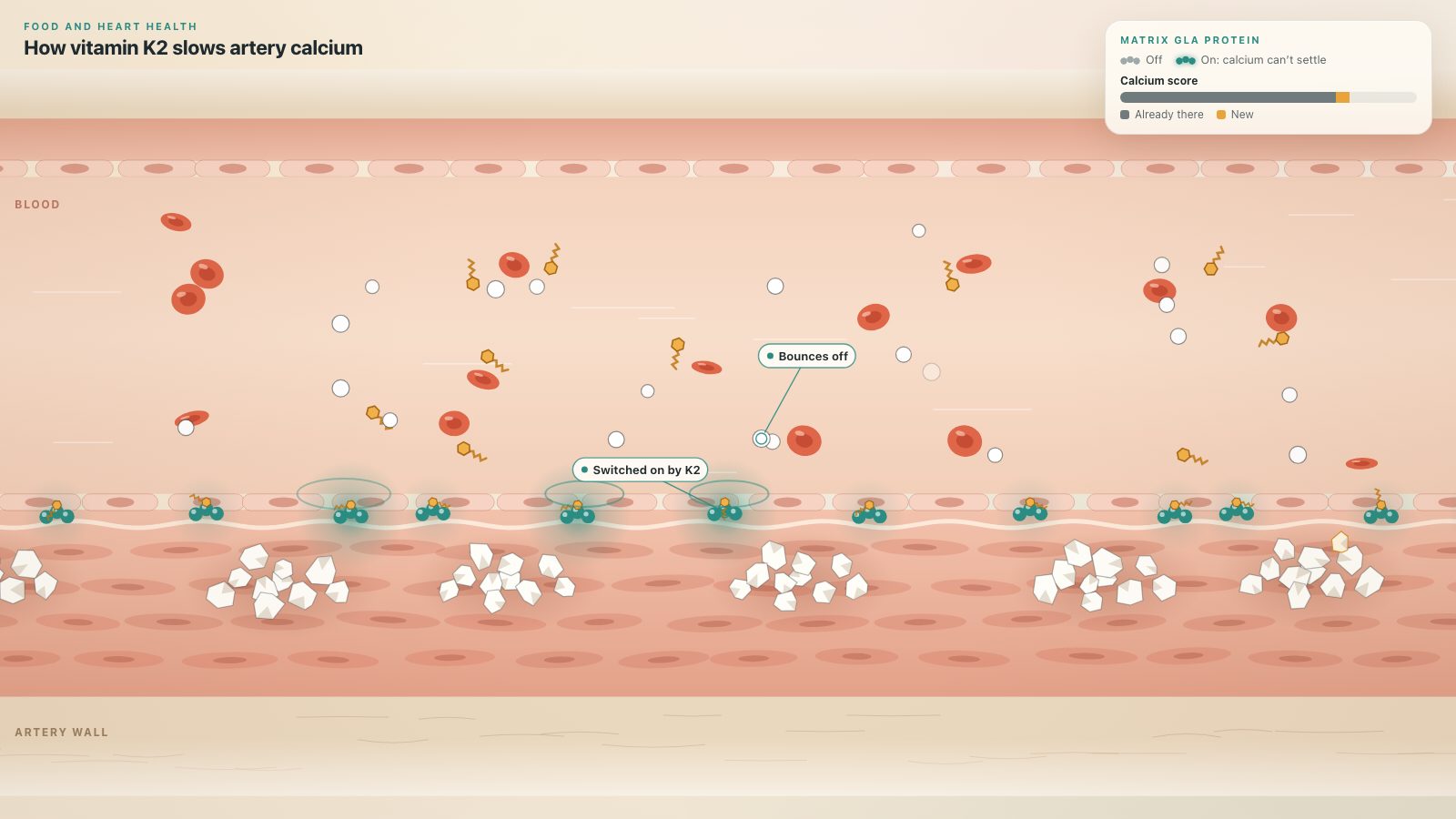
Does the vitamin do that in people? Two randomized trials published in 2026 gave MK-7 pills or a placebo for 2 years and measured coronary artery calcium, the calcified plaque a heart CT scan counts [4, 6]. The Dutch trial took 180 people with diagnosed coronary artery disease; the Danish one, 398 people (median age 71) whose score was already 400 or more. On both, the calcium grew more slowly.
| Trial (2-year rise in calcium score) | What they took | MK-7 | Placebo |
|---|---|---|---|
| Netherlands, 180 heart patients [4, 5] | 360 µg MK-7 a dayless than 1 pack of natto | +49 | +69 |
| Denmark, 398 people with heavy calcium [6] | 720 µg MK-7 + vitamin D3 a day | +19621% less | +248 |
What the trials could not show is fewer heart attacks: the Danish trial had 2 against 3, far too few to count [6]. An earlier trial was less kind. In 365 Danish men with a calcified heart valve, the same pills did not slow the valve's calcium, and their coronary calcium slowed by an amount that could have been chance [7]. The Danish researchers wrote that their findings "do not establish a role for routine vitamin K2 and D3 supplementation" [6].
The enzyme that didn't
If K2 is half the story, is the enzyme the other half? The best nattokinase trial, in Los Angeles, gave 265 healthy adults aged 55 and over 2,000 fibrin units a day or a placebo for 3 years [8]. The carotid artery wall thickened at the same rate on both: 0.013 mm a year against 0.011. Blood pressure, cholesterol and clotting tests did not change.
The "plaque shrank 36%" study gave 1,062 people more than 5 times that dose for a year, with no comparison group; five of its authors worked for the enzyme's maker [9]. A small Korean trial in 86 people with high blood pressure found systolic pressure 5.6 mmHg lower after 8 weeks, and it too was paid for by the maker [12].
So back to the sticky pack. The part with trial support is the vitamin, not the enzyme the pills are named after, and the pack holds at least the dose the Dutch trial used.
Our grade
| Claim | Evidence | Grade |
|---|---|---|
| Natto eaters have fewer heart and stroke deaths | 2 Japanese cohort studies, 122,000 adults, 15 to 16 years [2, 3] | Promising |
| The link is specific to natto, not soy | Same 2 studies: total soy and miso showed no link [2, 3] | Promising |
| Vitamin K2 (MK-7) slows artery calcium | 2 randomized trials, 180 and 398 people, 2 years [4, 6]; 1 trial in men with no clear effect [7] | Promising |
| Nattokinase pills clear plaque or lower blood pressure | 1 good 3-year randomized trial, 265 adults, no effect [8]; positive studies small, uncontrolled or maker-funded [9, 12] | Debunked |
| Overall: natto is good for your heart | Consistent cohorts plus K2 trials on calcium; no trial of natto itself | Promising |
The grade rests on two cohorts that agree, so the question is how they could both be wrong. The case for the other side:
The cohort studies can't prove natto did it. In Takayama, 43% of people who ate no natto smoked, against 29% of the top eaters [3]. Adjusting for smoking helps, but it never removes everything.
There was no steady dose effect. The smallest natto group, about 1 to 7 g a day, already had most of the drop, and more natto added little [2]. That fits "eaters are different people" as well as "a little natto is enough". Women who ate natto also died 38% less often of lung disease [2], which natto has no known way to cause.
People on warfarin, the blood thinner, are told to avoid natto, which puts some of the sickest hearts in the non-eater group [3].
The K2 trials measured calcium, not heart attacks or deaths. And the Danish trial added vitamin D3, so its effect can't be pinned on K2 alone [6].
What would change the grade: a trial of K2 or natto that counts heart attacks and deaths. Up to Solid if it works; down to Weak if it doesn't.
What this means for you
If you like natto, eat it; I do, most weeks. A 40 to 50 g pack once a week or more is about where the Japanese studies saw 21% to 25% fewer heart and stroke deaths [2, 3].
How much, and how soon
Per meal: one pack, 40 to 50 g. That is about 400 to 500 µg of K2 [10].
Per week, there are two answers, depending on which result you want:
- To match the people in the death studies: one pack a week, about 50 g. In the Japan Public Health Center study, most of the drop was already there in the lowest group of eaters, about one pack a week, and more natto added little [2]. In Takayama, the top quarter ate a median of 7.3 g a day, also about a pack a week [3].
- To match the K2 trials: 360 µg a day is about 2,500 µg a week [4], or 5 to 6 packs (250 to 300 g). A pack two or three times a week sits between the two.
How soon? Not in weeks, and nothing you will feel. MK-7 in the blood rises within 5 hours of a pack [11]. A blood marker of switched-off matrix Gla protein fell within 6 months on K2 pills, while the calcium in the arteries did not change in that time [18]. The slower calcium showed up on scans at 2 years [4, 6], and the fewer deaths came over about 15 years of follow-up [2, 3]. Think of natto as a habit for decades, not a cure for a month.
If you can't stand natto, a K2 pill is the evidence-backed half of it. Trials used 360 to 720 µg of MK-7 a day [4, 6]. Expect slower calcium, not proof of fewer heart attacks.
Skip nattokinase pills. The best trial found nothing on artery walls or blood pressure [8]. The food has the death data; the pill named after it does not.
If you take warfarin, talk to your doctor before eating natto or taking K2: one serving keeps MK-7 high for days [11], which works against the drug. Stanfield points out that this is a warfarin problem only: apixaban, rivaroxaban and dabigatran are not affected [1]. Never swap a prescribed blood thinner for nattokinase; one patient who did had a clot form on a mechanical heart valve and needed the valve replaced again [13].
The most delicious way to eat it
Cooking is fine. Vitamin K2 is stable to heat [16], so natto stirred into hot rice or a fried egg keeps its K2. Nattokinase is the part that breaks down when heated [17], and it is also the part that failed its trial.
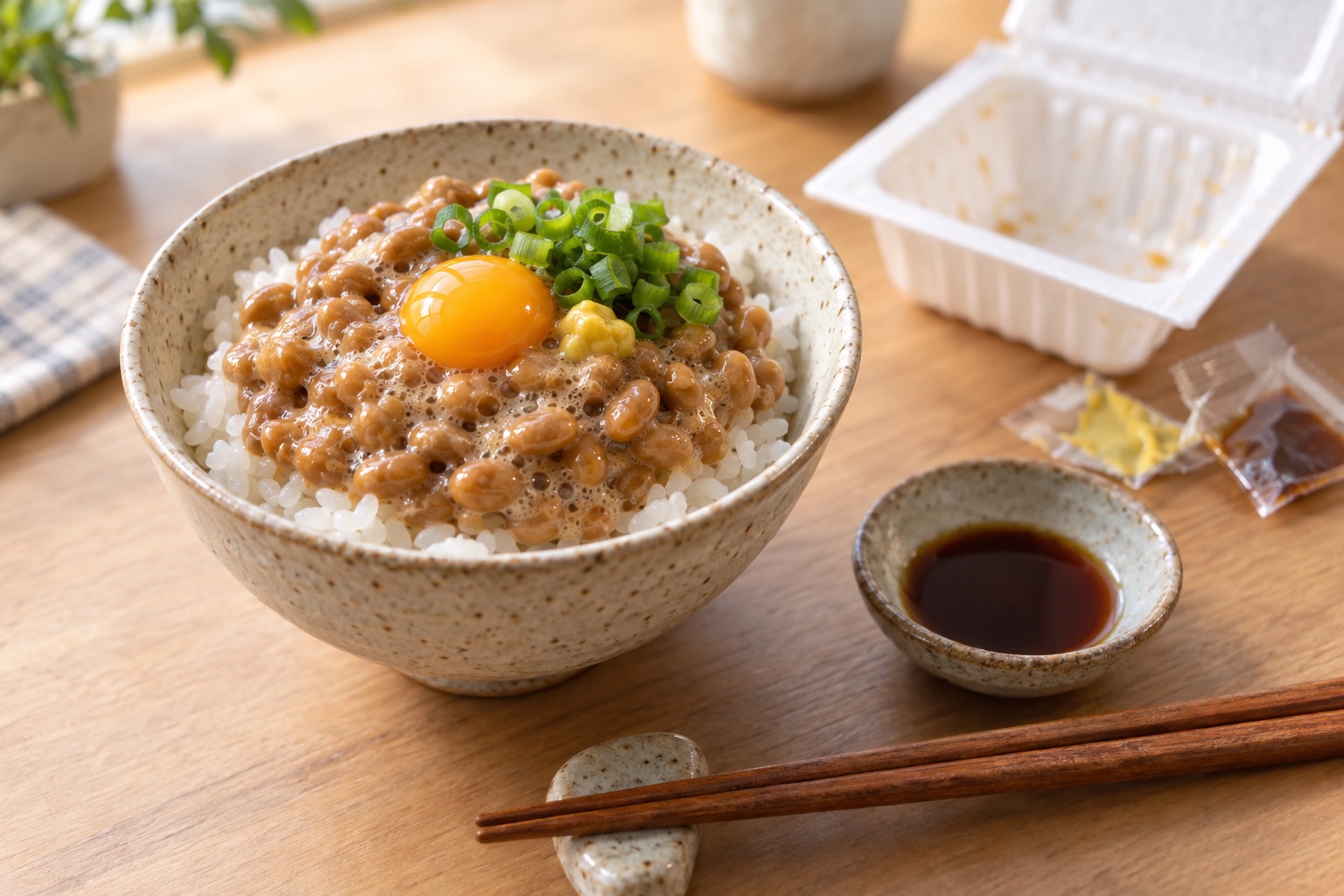
The Kyoto bowl
Serves 1 · 5 minutes · about 400–500 µg vitamin K2
Ingredients
- 150 g warm cooked rice (a small rice bowl)
- 1 pack of natto, 40 to 50 g, with its mustard and tare packets
- 1 tablespoon chopped negi or green onion
- 1 raw quail egg
- 1 teaspoon soy sauce, if you skip the tare
Method
- Put the rice in a bowl.
- Open the natto into a small dish. Stir it hard with chopsticks, about 30 times, until it turns pale and frothy and pulls long strings.
- Add the mustard packet and half the tare packet (or the soy sauce) and stir a few more times.
- Spoon it over the rice. Top with the negi and the quail egg.
Raw egg carries a small risk of salmonella. If you are pregnant, older or have a weak immune system, use a pasteurized egg or a fried one.
Other ways I like it:
- My everyday bowl: soy sauce, Dijon mustard and sliced long green onions over rice, or a fried egg mixed in.
- With kimchi, for a sour, spicy bowl.
- Rolled: natto and rice in a sheet of nori, the hand roll called natto maki.
The tare, soy sauce and kimchi all add salt. If your blood pressure is high, use half the tare packet or a low-sodium soy sauce.
I buy it by the kilogram, keep some in the fridge and freeze the rest. We found no study of how much K2 is left after freezing.
That first bowl in Kyoto is still my favorite breakfast, and the best news in this check is how little it takes. In the Japanese studies, people who ate about one pack a week already had around a quarter fewer heart and stroke deaths [2, 3]. That is one small bowl, five minutes, once a week. Get past the smell, and it may be the most delicious thing you do for your heart.
In two Japanese studies, how much less often did natto eaters die of heart disease and stroke than people who never ate natto?
The Japan Public Health Center study found 24% (men) and 21% (women); Takayama found 25%.
Which part of natto has trial evidence for arteries?
Two 2026 trials found K2 slowed the calcium score; the best nattokinase trial found no effect.
What did people who ate a lot of soy overall, or a lot of miso, show?
Total soy and miso showed no link; only natto did.
Who should check with a doctor before eating natto?
Natto's vitamin K works against warfarin; the newer blood thinners are not affected.
What's next
The next big answer is a trial that counts heart attacks and deaths on vitamin K2, not only artery calcium. None has reported yet. When one does, we will update this check, and again when the full Dutch trial paper is open to read (we graded it from the abstract and an editorial).
On this site: how heart age and biological age tests work, and the five health levers with the biggest effect on lifespan, and why five foods beat a multivitamin.
Was this helpful?
Sources
Show all sources (18)
- Creators on natto, nattokinase and K2. Norwitz N. "Nattokinase: The Heart Health Supplement on Everyone's Tongue." Stay Curious Metabolism (Substack), December 21, 2025. https://staycuriousmetabolism.substack.com/p/nattokinase-the-heart-health-supplement · Physionic. Short video on vitamin K2 and coronary calcium, October 2026. https://www.youtube.com/shorts/HvP4vhYvhDA · Patrick R, Ames B. "Differences between vitamin K1 and K2." FoundMyFitness, April 3, 2022. https://www.foundmyfitness.com/episodes/differences-between-vitamin-k1-k2 · Stanfield B. "Nattokinase: Breakthrough Supplement For Heart Health?" YouTube. https://www.youtube.com/watch?v=3-PAtr2hjVg · Stanfield B. "Does vitamin K2 actually protect your heart? New trial." July 3, 2026. https://drstanfield.com/blogs/articles/does-vitamin-k2-actually-protect-your-heart-new-trial
- Katagiri R, Sawada N, Goto A, et al. Association of soya and fermented soya product intake with total and cause specific mortality: prospective cohort study. BMJ, 2020. 92,915 adults aged 45 to 74, observational, 14.8 years. Funded by Japan's National Cancer Center and Ministry of Health, Labour and Welfare. https://doi.org/10.1136/bmj.m34
- Nagata C, Wada K, Tamura T, et al. Dietary soy and natto intake and cardiovascular disease mortality in Japanese adults: the Takayama study. American Journal of Clinical Nutrition, 2017. 29,079 adults aged 35 and over, observational, 16 years. https://doi.org/10.3945/ajcn.116.137281
- Vossen LM, de Leeuw PW, Schurgers LJ, et al. Two years of menaquinone-7 supplementation and coronary artery calcification: a randomized clinical trial. JAMA Cardiology, 2026. 180 adults with coronary artery disease, randomized, placebo-controlled, 2 years. Tablets supplied by NattoPharma. Graded from the abstract and editorial. https://doi.org/10.1001/jamacardio.2026.1279
- Blaha MJ, Choi S. Coronary artery calcium progression: a useful outcome in clinical trials? JAMA Cardiology, 2026 (editorial). https://doi.org/10.1001/jamacardio.2026.1267
- Hasific S, Øvrehus KA, Mejldal A, et al. Vitamin K2 and D3 supplementation in patients with severe coronary artery calcification: the DANCODE trial. Circulation, 2026. 398 adults, randomized, placebo-controlled, 2 years. Tablets supplied by Kappa Bioscience and Orkla Care. https://doi.org/10.1161/CIRCULATIONAHA.126.082363
- Diederichsen ACP, Lindholt JS, Möller S, et al. Vitamin K2 and D in patients with aortic valve calcification: a randomized double-blinded clinical trial. Circulation, 2022. 365 men aged 65 to 74, randomized, 2 years. https://doi.org/10.1161/CIRCULATIONAHA.121.057008 · Hasific S, et al. Effects of vitamin K2 and D supplementation on coronary artery disease in men. JACC: Advances, 2023. 304 of the same men. https://doi.org/10.1016/j.jacadv.2023.100643
- Hodis HN, Mack WJ, Meiselman HJ, et al. Nattokinase atherothrombotic prevention study: a randomized controlled trial. Clinical Hemorheology and Microcirculation, 2021. 265 adults aged 55 and over, randomized, placebo-controlled, median 3 years. Product donated by Jarrow Formulas and Japan Bio Science Laboratory. https://doi.org/10.3233/CH-211147
- Chen H, Chen J, Zhang F, et al. Effective management of atherosclerosis progress and hyperlipidemia with nattokinase: a clinical study with 1,062 participants. Frontiers in Cardiovascular Medicine, 2022. 1,062 adults, retrospective, no control group, 12 months. Five authors employed by the maker. https://doi.org/10.3389/fcvm.2022.964977
- National Institutes of Health, Office of Dietary Supplements. Vitamin K fact sheet for health professionals. Natto, 3 ounces: 850 µg. https://ods.od.nih.gov/factsheets/VitaminK-HealthProfessional/
- Homma K, Wakana N, Suzuki Y, et al. Treatment of natto, a fermented soybean preparation, to prevent excessive plasma vitamin K concentrations in patients taking warfarin. Journal of Nutritional Science and Vitaminology, 2006. https://doi.org/10.3177/jnsv.52.297
- Kim JY, Gum SN, Paik JK, et al. Effects of nattokinase on blood pressure: a randomized, controlled trial. Hypertension Research, 2008. 86 adults, randomized, placebo-controlled, 8 weeks. Funded by the maker. https://doi.org/10.1291/hypres.31.1583
- Elahi MM, Choi CH, Konda S, Shake JG. Consequence of patient substitution of nattokinase for warfarin after aortic valve replacement with a mechanical prosthesis. Proceedings (Baylor University Medical Center), 2015. Case report. https://doi.org/10.1080/08998280.2015.11929198
- Hong C, Chen Y, Li L, et al. Identification of a key gene involved in branched-chain short fatty acids formation in natto by transcriptional analysis and enzymatic characterization in Bacillus subtilis. Journal of Agricultural and Food Chemistry, 2017. Laboratory study. https://doi.org/10.1021/acs.jafc.6b05518
- Ara K, Hama M, Akiba S, et al. Foot odor due to microbial metabolism and its control. Canadian Journal of Microbiology, 2006. https://doi.org/10.1139/w05-130
- Walther B, Chollet M. Menaquinones, bacteria, and foods: vitamin K2 in the diet. In Vitamin K2: Vital for Health and Wellbeing, InTech, 2017. https://doi.org/10.5772/63712
- Li Y, Chen L, Tang X, et al. Combined computer-aided predictors to improve the thermostability of nattokinase. Foods, 2023. Laboratory study. https://doi.org/10.3390/foods12163045
- Zwakenberg SR, de Jong PA, Bartstra JW, et al. The effect of menaquinone-7 supplementation on vascular calcification in patients with diabetes: a randomized, double-blind, placebo-controlled trial. American Journal of Clinical Nutrition, 2019. 68 adults with type 2 diabetes and heart disease, randomized, placebo-controlled, 6 months. MK-7 tablets from NattoPharma. https://doi.org/10.1093/ajcn/nqz147
Discussion