

One day of ordinary food met every nutrient target
Evidence check, October 18, 2026. Updated October 31, 2026.
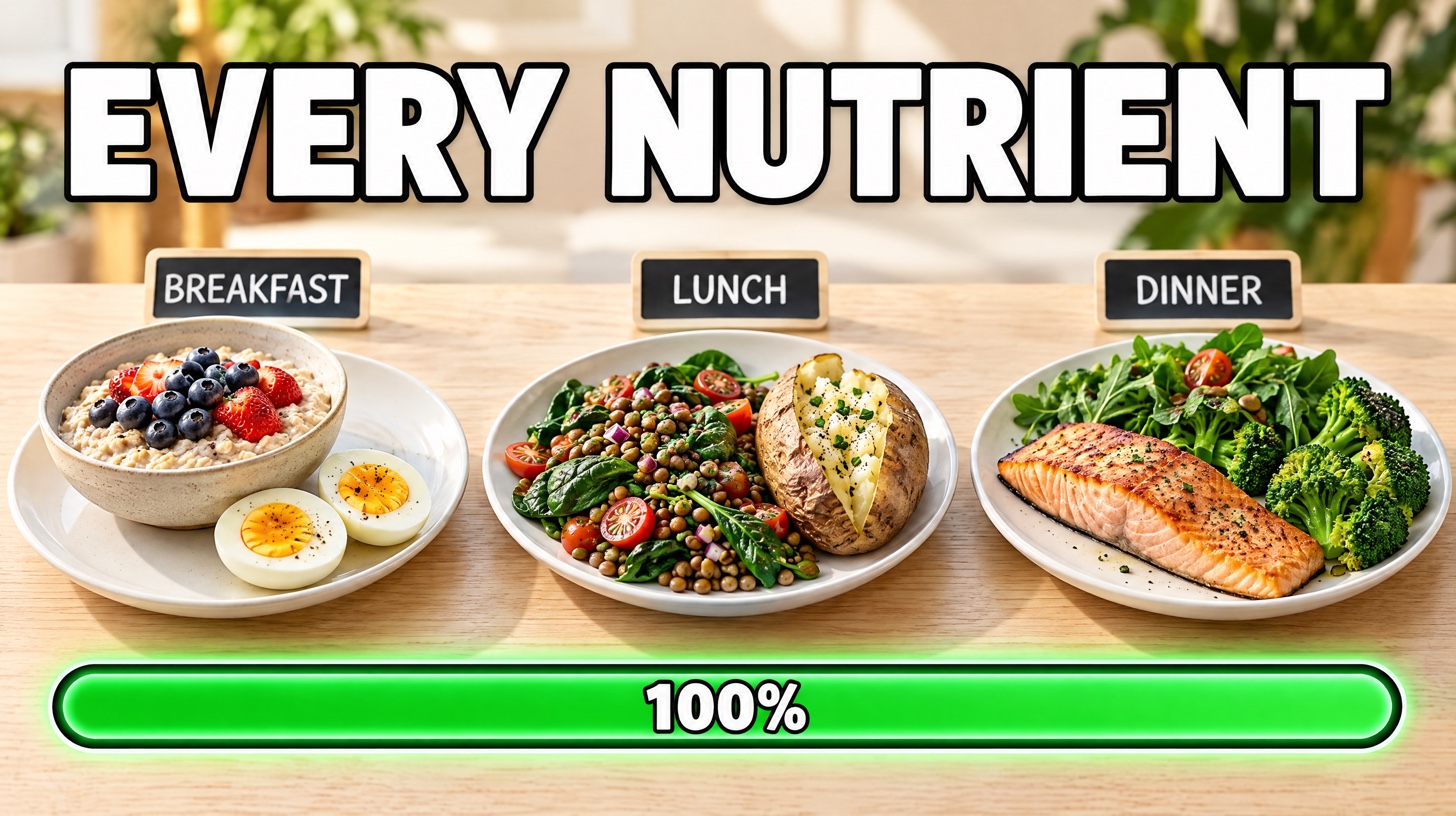
The claim: "Three meals of whole food can supply every essential nutrient."
Our grade: Promising. We added up one day of ordinary food, and it met every vitamin, mineral, essential fat and amino acid target we could measure, with no pill. A French study did the same on paper for 1,171 adults. It works only with a few key foods, and vitamin D comes almost entirely from fish.
You eat eggs and oatmeal for breakfast, a lentil salad for lunch and salmon for dinner. A friend tells you to take a multivitamin anyway, "for insurance".
Is your plate really missing anything?
The numbers say most plates are. In a US survey of 16,110 people, every single one got less vitamin D than the body needs from natural food alone, and 93% fell short on vitamin E [7].
Where the claim came from
Rhonda Patrick of FoundMyFitness makes the case for gaps. Her page on multivitamins says: "Up to 70% of Americans don't get enough vitamin D, nearly 50% fall short of their magnesium needs, and 35% have an insufficient intake of calcium." [1] On the Huberman Lab podcast in May 2022 she put the blame on food choices, not on food itself: "People aren't eating their greens... So dark, leafy greens are how I like to get my magnesium... you get calcium in them. You get vitamin K1." [2] In the same episode Andrew Huberman read an ad for AG1, a paid sponsor, saying it "helps me cover all of my basic nutritional needs" [2].
Siim Land sets a high bar for food. He writes that he gets "around 30-40 grams of fiber per day", and that eating fish twice a week gives "only 300-450 mg/day" of fish oil: "That's not enough... I eat fish around 3-4 times a week and I take 1.5-3 grams of an omega-3 supplement every day." [3]
So can food alone get there? We built one day and counted.
One perfect day hit every target
We planned a day for an 80 kg man (Siim Land's weight) and one for a 65 kg woman, and looked up every food in the US government's food database, USDA FoodData Central [4]. We then compared the totals with the US targets: the RDA (the amount that covers 97% to 98% of healthy people) or, where no RDA exists, the AI (an amount assumed to be enough), and the upper limits [5]. This is our own calculation, not a study of people.
The day was nothing exotic:
| Meal | What we ate |
|---|---|
| Breakfast | 3 boiled eggs, 60 g oats, 150 g blueberries, 250 g plain low-fat yogurt, 20 g pumpkin seeds |
| Lunch | 250 g cooked lentils, 100 g raw spinach, a tomato, a 200 g baked sweet potato, 10 g olive oil |
| Dinner | 150 g farmed salmon, 200 g potatoes, 200 g broccoli |
| Snacks | 1 Brazil nut, 20 g almonds, 15 g walnuts, 20 g dark chocolate, an orange, a banana |
| Once a week | 75 g beef liver (counted as one seventh a day) |
| All day | 3 g iodized salt |
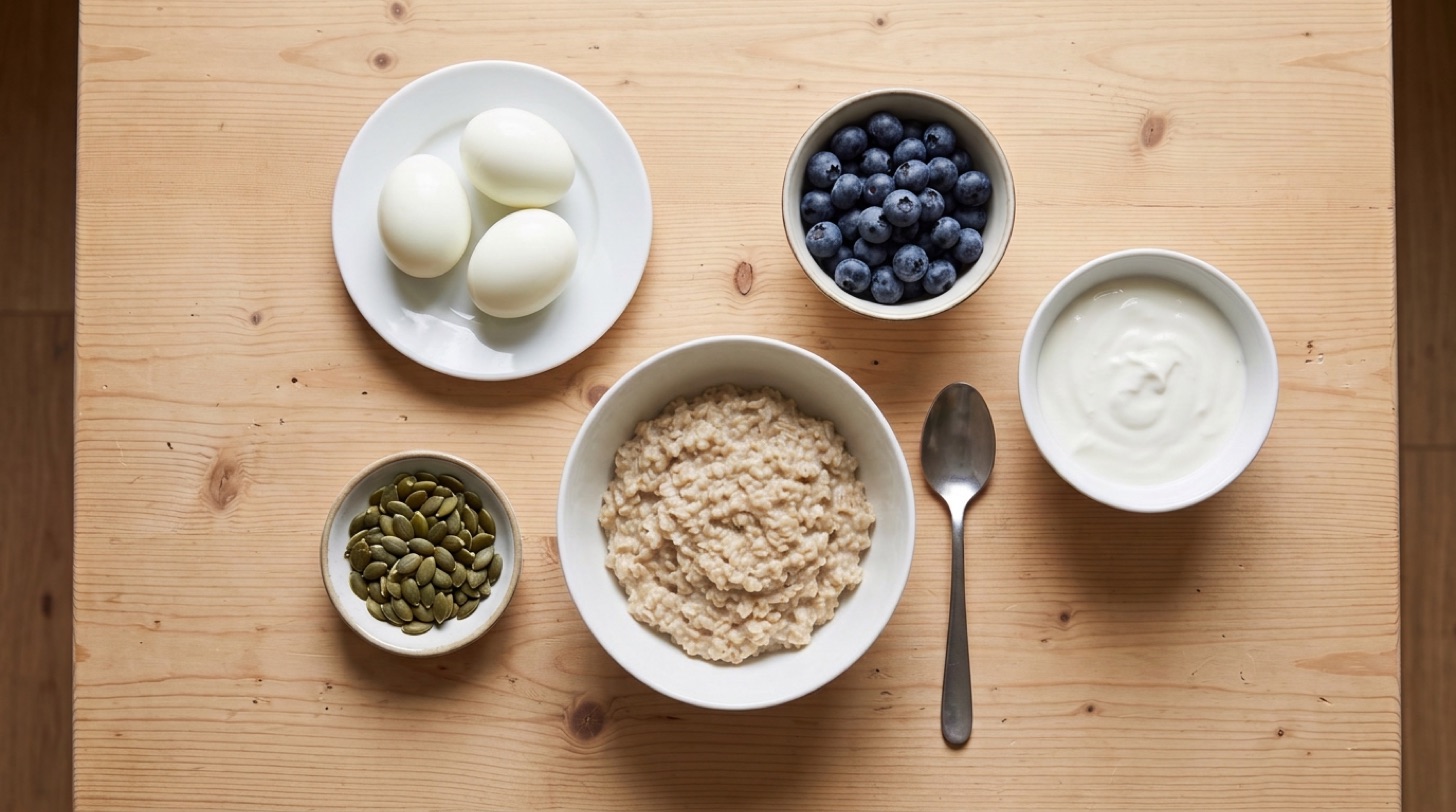
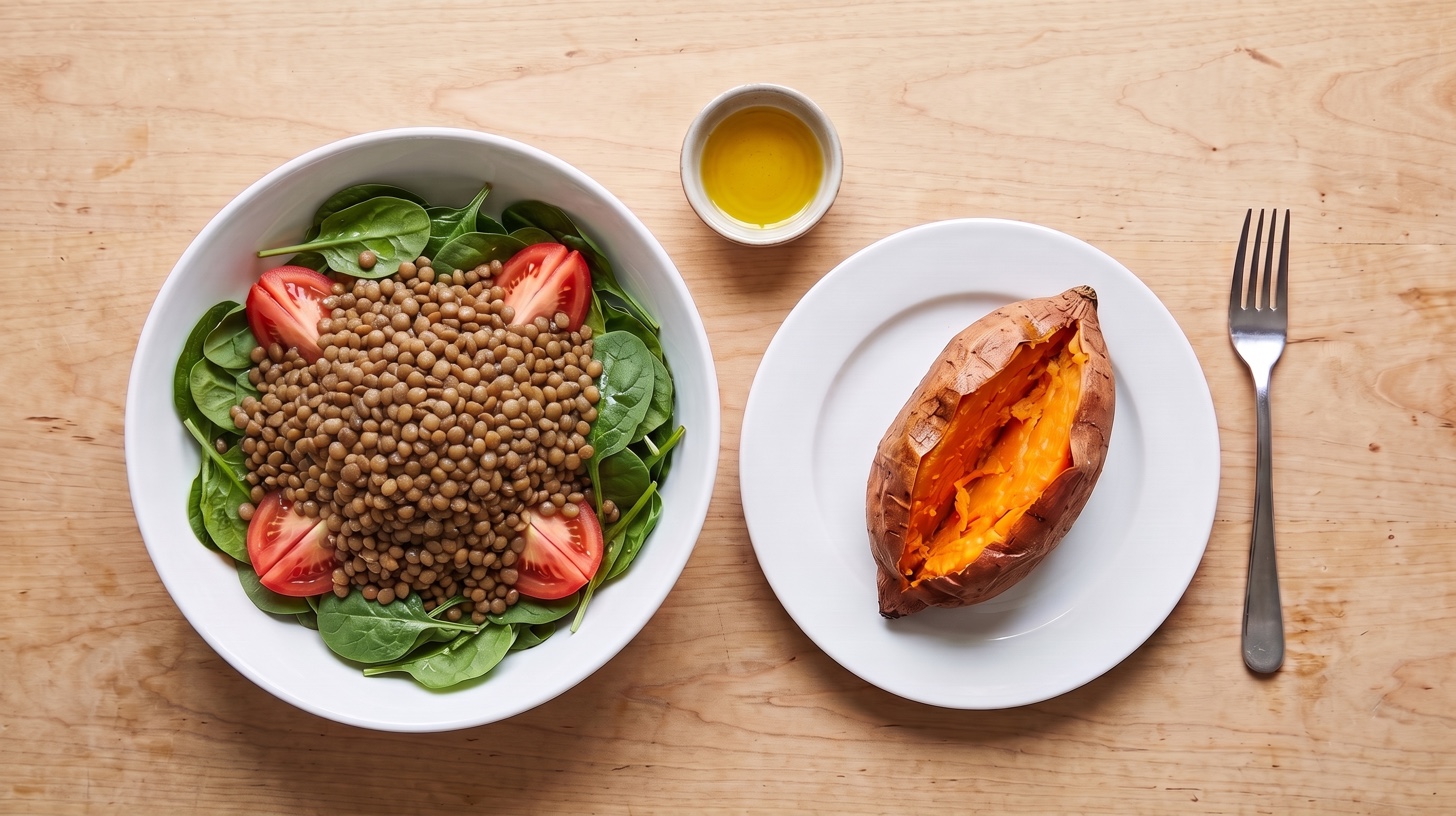
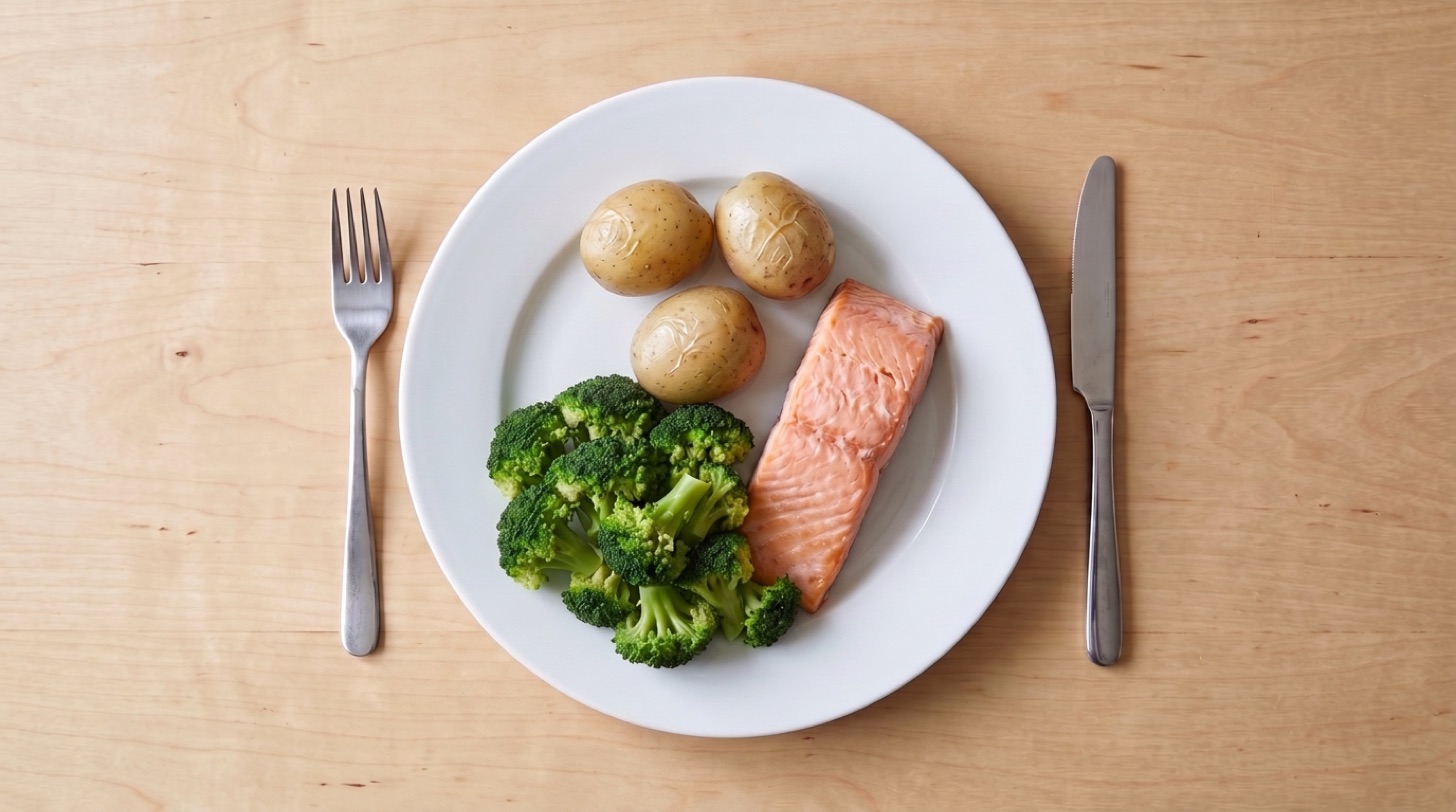
It came to 2,533 calories, 134 g of protein (1.7 g per kg) and 64 g of fiber. Every vitamin and mineral with food data passed its target, from vitamin D at 154% to vitamin K at 691%. So did the essential fats: 2.4 g of ALA, the plant omega-3 (151%), 20.0 g of linoleic acid, the main omega-6 (118%), and 3.3 g of the fish oils EPA and DHA. Each of the nine essential amino acids came in at three to five and a half times the WHO need. Saturated fat was 8.2% of calories, and free sugar (added sugar and juice) only 5 g. Only chromium could not be counted: its food data are too poor.
| Meal | What we ate |
|---|---|
| Breakfast | 2 boiled eggs, 40 g oats, 150 g blueberries, 300 g plain low-fat yogurt, 20 g pumpkin seeds |
| Lunch | 200 g cooked lentils, 100 g raw spinach, a tomato, a 100 g baked sweet potato, 5 g olive oil |
| Dinner | 120 g farmed salmon, 100 g potatoes, 200 g broccoli |
| Snacks | 1 Brazil nut, 20 g almonds, 10 g walnuts, 10 g dark chocolate, an orange |
| Once a week | 75 g beef liver (counted as one seventh a day) |
| All day | 3 g iodized salt |
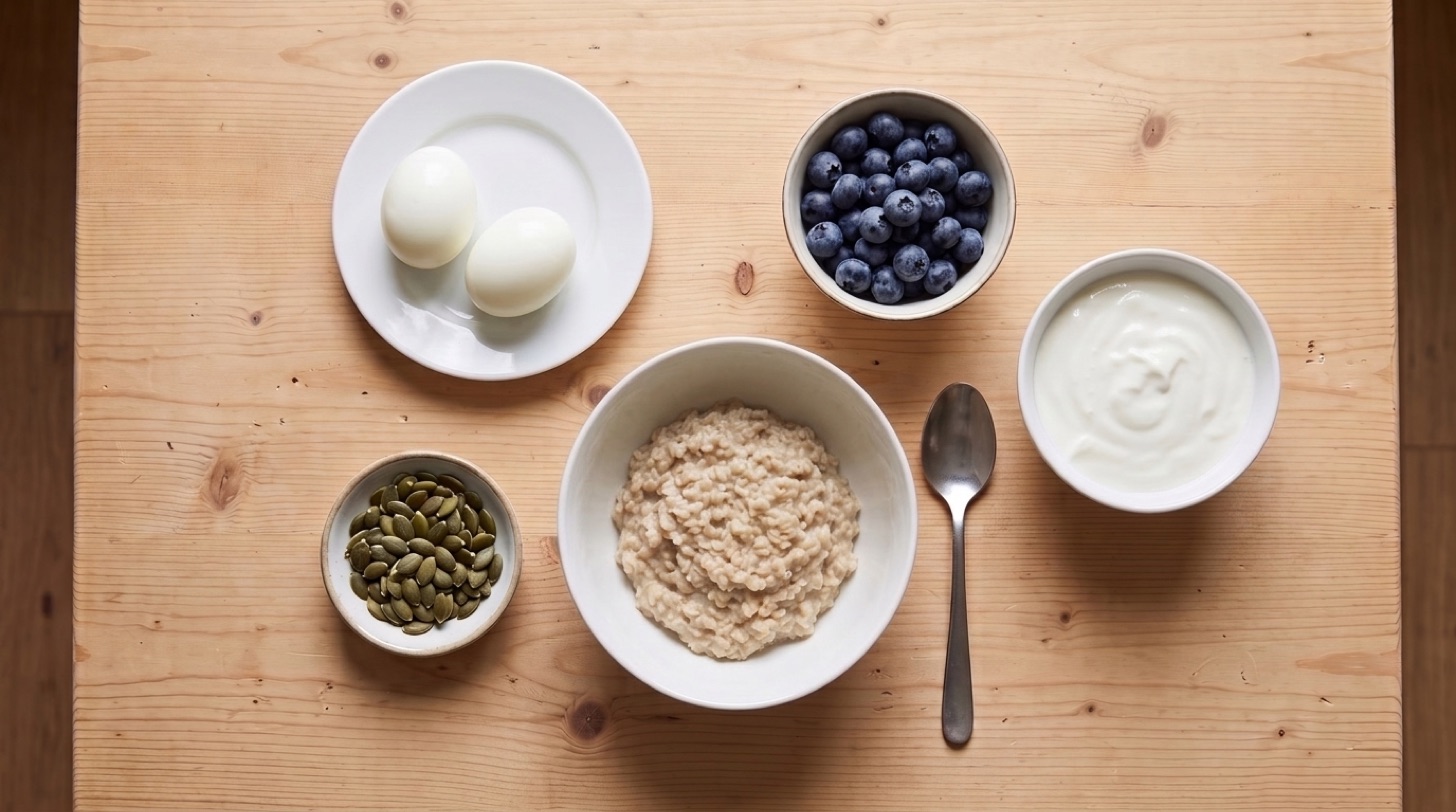
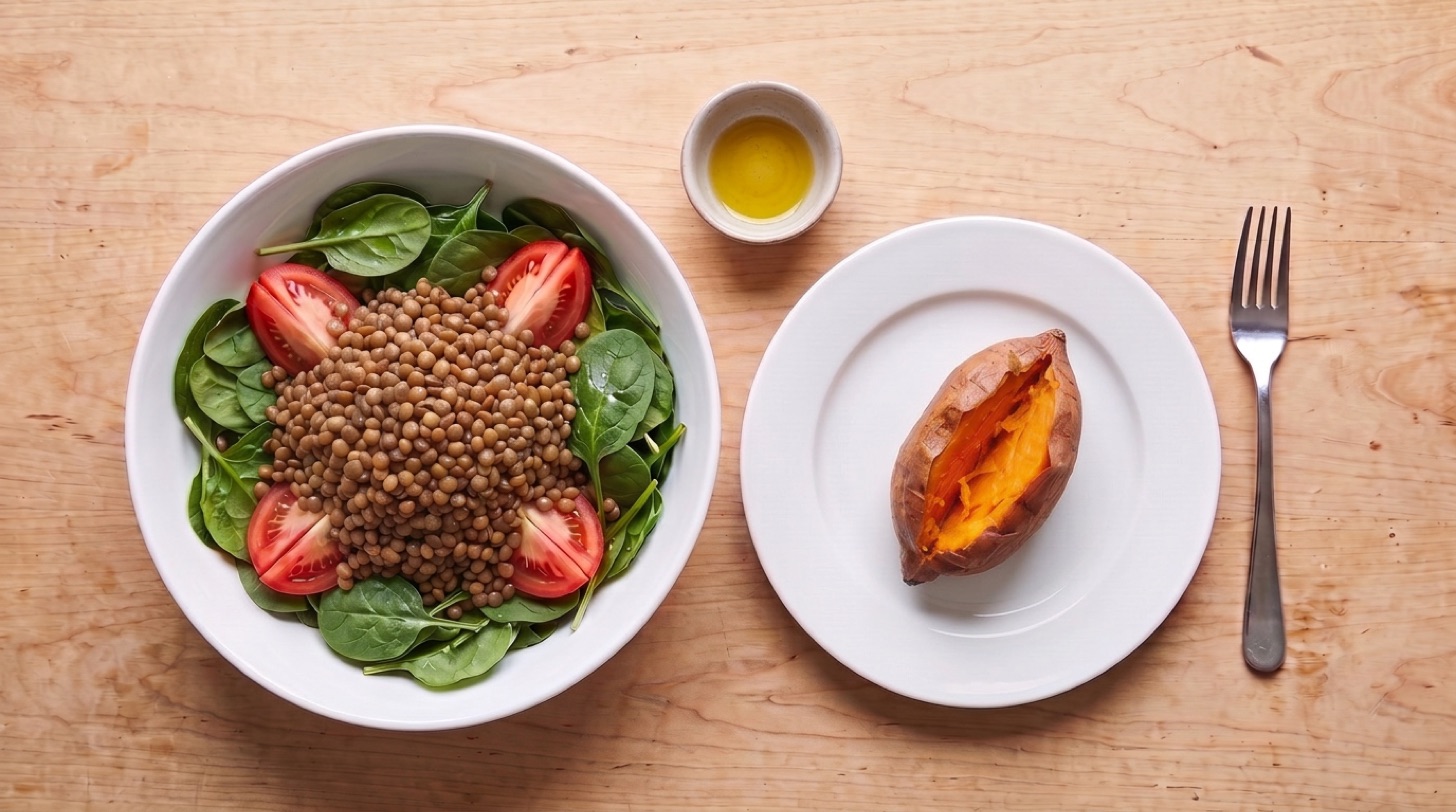
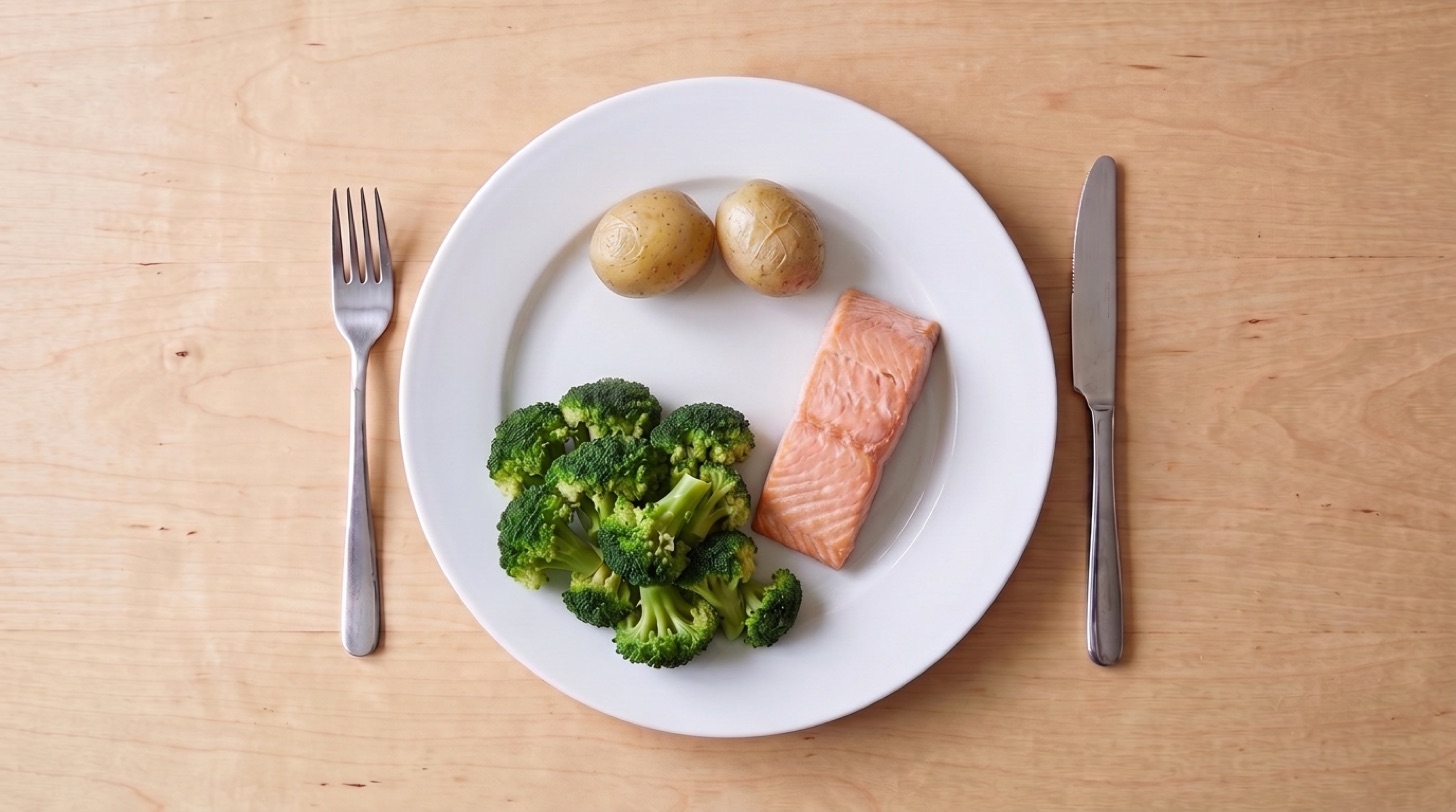
It came to 1,871 calories, 109 g of protein (1.7 g per kg) and 48 g of fiber. A woman's targets differ from a man's in a few places: more iron (18 mg instead of 8) and less of several others, such as zinc, magnesium and vitamin K. Every vitamin and mineral with food data passed its target, from calcium at 107% to vitamin K at 910%. Iron reached 21.0 mg (116%). So did the essential fats: 1.8 g of ALA, the plant omega-3 (163%), 16.0 g of linoleic acid, the main omega-6 (133%), and 2.6 g of the fish oils EPA and DHA. Each of the nine essential amino acids came in at three to five and a half times the WHO need. Saturated fat was 8.4% of calories, and free sugar (added sugar and juice) under 5 g. Only chromium could not be counted: its food data are too poor.
So if one day can do it, why does almost everyone fall short? Our first try failed, and it showed why. With wild salmon and no walnuts, the man's vitamin D reached only 23% and both the plant omega-3 and omega-6 fell short. Switching to farmed salmon, which carries far more vitamin D in the database, and adding 15 g of walnuts fixed all three. The woman's day nearly failed on calcium: with 200 g of yogurt it reached 89%, and a bigger bowl of 300 g fixed it.
A handful of foods did the hard work
Most nutrients came easily from many foods. A few came from one food each, and dropping that food drops the nutrient:
| Food | Amount | What it carried |
|---|---|---|
| Salmon | 150 g | Vitamin D and nearly all the EPA and DHA |
| Brazil nut | 1 nut, 5 g | 96 of the day's 252 mcg selenium |
| Eggs | 3 | Most of the choline, 990 mg in all (180%) |
| Beef liver | 75 g once a week | Vitamin B12, vitamin A and copper |
| Iodized salt | 3 g | Most of the iodine, about 300 mcg (our estimate) |
| Almonds and walnuts | 35 g | Vitamin E (131%) and the plant omega-3 |
| Food | Amount | What it carried |
|---|---|---|
| Salmon | 120 g | Most of the vitamin D and nearly all the EPA and DHA |
| Brazil nut | 1 nut, 5 g | 96 of the day's 216 mcg selenium |
| Yogurt | 300 g | The calcium that took the day over its target, 1,068 mg in all (107%) |
| Eggs | 2 | The biggest share of the choline, 759 mg in all (178%) |
| Beef liver | 75 g once a week | Vitamin B12, vitamin A and copper |
| Iodized salt | 3 g | Most of the iodine (our estimate) |
| Almonds and walnuts | 30 g | Vitamin E (114%) and the plant omega-3 |
A French team found the same pattern with a computer [11]. They took the food diaries of 1,171 adults and asked a program to change as little as possible until each diet met 32 nutrient goals at the same calories. It found an answer for every person, and in half of them fewer than 5 foods had to change. One line in their summary reads like our menu: "Fatty fish and walnuts were added to each modeled diet."
So a complete day is possible from food. The catch is two nutrients.
Vitamin D and fish oil are the hard ones
Take the salmon out of our day and vitamin D falls to about 3 mcg, 23% of the 15 mcg target [6]. Fish oil falls to almost nothing.
Take the salmon out of our day and vitamin D falls to 2.3 mcg, 16% of the 15 mcg target [6]. Fish oil falls to almost nothing, and protein to 83 g, below the 104 g goal.
No other food in the day comes close: an egg has about 1 mcg of vitamin D, so you would need 15 eggs, or about 5 cups of fortified milk.
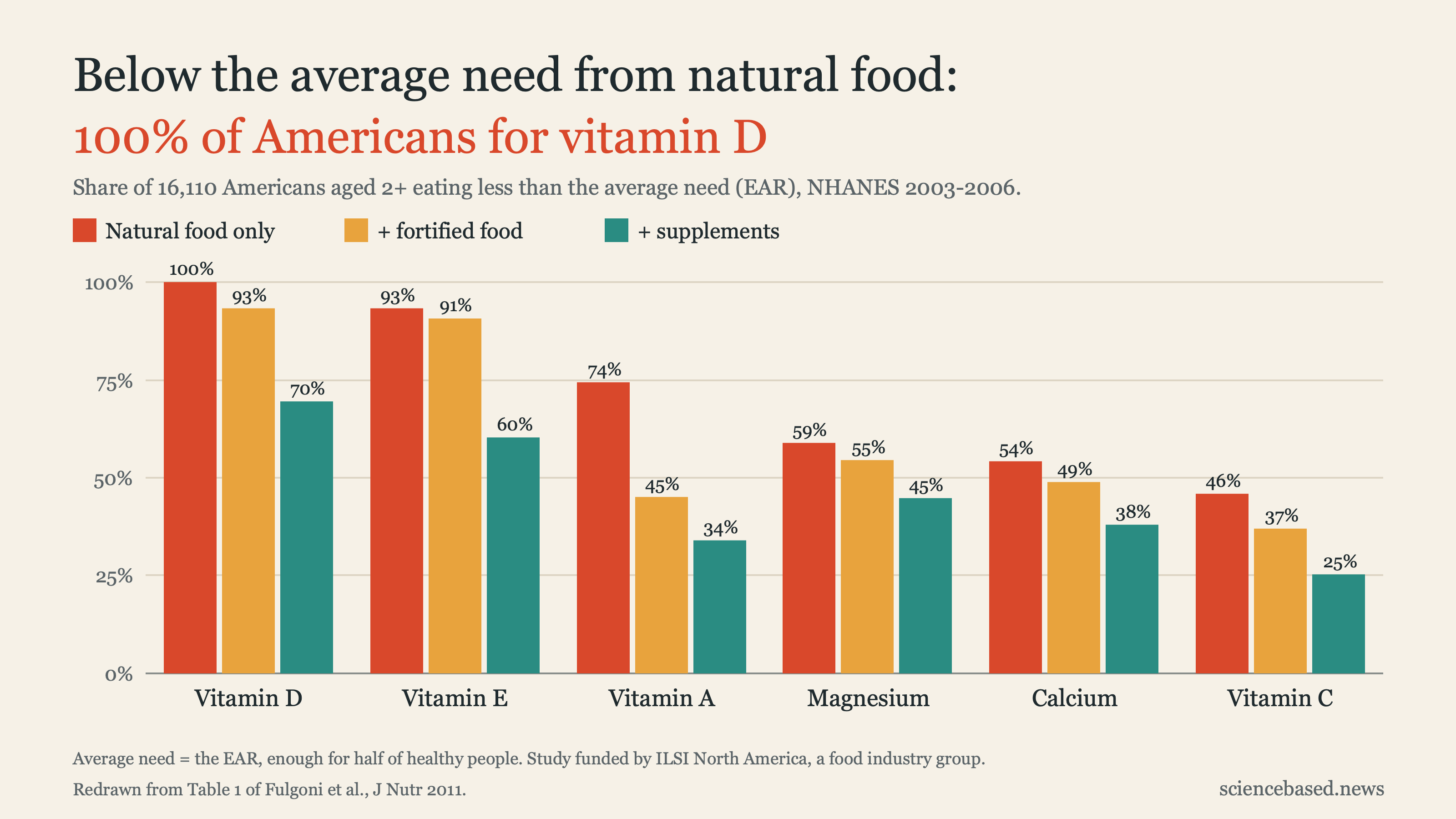
The national numbers say the same, from three different angles.
In the US survey behind the chart, 16,110 people aged 2 and older reported two days of eating in 2003 to 2006 [7]. From natural food alone, 100% were below the average need for vitamin D. Fortified milk and cereal brought that to 93%, and pills to 70%. The study was paid for by ILSI North America, a food industry group.
The US government's own model diets, built from healthy foods for the 2020 Dietary Guidelines, also fall short. "The nutrients for which adequacy goals are not met in almost all patterns are vitamin D, vitamin E, and choline," the advisory committee wrote [8]. Its Healthy US-Style diets reached 38% to 75% of the vitamin D target. Our day beats that template on all three, with salmon, nuts and eggs.
In the 2015-2016 survey, Americans ate an average of 4.9 mcg of vitamin D a day, and 94% were below the average need [9]. Blood tests tell a milder story: only 18% were at risk of too little, because skin makes vitamin D in the sun [9].
When the French team limited each person to foods they already ate, only 22% of diets could meet every goal, and vitamin D was the hardest: dropping it doubled the share that could [10].
So food can cover vitamin D, but almost only through oily fish. The American Heart Association advises one to two seafood meals a week, which gives about 250 mg a day of EPA and DHA [12]. Siim Land thinks that is not enough [3], and our fish days gave 3.3 g for the man and 2.6 g for the woman.
We also ran an ordinary day without fish: pancakes, a chicken burrito and a steak. Nobody would call it junk. It had more protein than our day and still missed 12 nutrients, with vitamin D at 2% and fish oil at 12%. Plant foods fixed most of the gaps. Vitamin D and fish oil were the two no food change could close; one fish oil capsule with vitamin D closed both.
The limits
These are two days on paper, one for a man and one for a woman. Our numbers come from a database, not from blood tests of people eating this way, and nobody has tested whether such a day changes health. Farmed salmon's vitamin D varies from fish to fish. Iodine and biotin are our estimates, because the database has no values for them.
A smaller eater may not fit everything in. A woman needs 18 mg of iron, more than twice a man's 8, and the government's model diets for women aged 19 to 50 reach only 75% to 78% of that target [8]. Our woman's day met it; pick "Woman" at the top to see how.
Some numbers sit close to a ceiling. Manganese was 9.4 mg against an upper limit of 11 [5]. On the liver day, vitamin A in its ready-made form reaches about 6,200 mcg, twice the 3,000 mcg limit; over the week it averages about 1,200 a day, but liver is not for pregnancy. One Brazil nut is enough, since nuts vary widely in selenium. And 64 g of fiber is nearly four times what Americans eat [9]; Siim Land's advice is to add it slowly.
Adding pills to this day caused the only problems we found. With a popular two-a-day multivitamin on top, zinc reached 42 mg, selenium 452 mcg and manganese 11.4 mg, all over US upper limits of 40, 400 and 11 [5]. The rest of the label stayed under its limits, iodine included (about 457 mcg against 1,100). The pill has no calcium, potassium, iron, copper, vitamin K or choline; this day got all of them from food. The day already met every target, so the pill added risk and filled no gap.
Iron passed, but with less room than the number suggests. Almost all of the day's 21.0 mg came from plants: lentils 6.7 mg, spinach 2.7, pumpkin seeds 1.8, oats 1.7. The body absorbs plant iron less well than iron from meat: about 5% to 12% from a vegetarian diet against 14% to 18% from a mixed one, which is why vegetarians are told to eat 1.8 times the RDA [14]. Our day is not vegetarian, but little of its iron came from meat. Women aged 19 and over eat 12.6 to 13.5 mg a day on average [14], so most real plates have far less room.
One pill stays on the list even after a perfect food day. The US Preventive Services Task Force advises that "all persons planning to or who could become pregnant take a daily supplement containing 0.4 to 0.8 mg (400 to 800 μg) of folic acid", its highest grade, A [13]. Our day had 1,050 mcg of folate from food (262%), and that advice still holds: it is about the pill. Pregnancy also raises the iron target to 27 mg [14], which we did not check.
Some numbers sit close to a ceiling. On the liver day, vitamin A in its ready-made form reaches about 6,200 mcg, twice the 3,000 mcg limit; over the week it averages about 1,200 a day, but liver is not for pregnancy. One Brazil nut is enough, since nuts vary widely in selenium. And 48 g of fiber is about three times what Americans eat [9]; Siim Land's advice is to add it slowly. Our day had 1,871 calories; a 1,600-calorie day was not checked.
Adding pills to this day caused the only problems we found. With a popular two-a-day multivitamin on top, selenium reached 416 mcg, over its US upper limit of 400, and zinc 39 mg, just under its limit of 40 [5]. The rest of the label stayed under its limits, iodine included (about 446 mcg against 1,100). That multivitamin has no iron, so it also missed the one nutrient with the least room. It has no calcium, potassium, copper, vitamin K or choline either. The day already met every target, so the pill added risk and filled no gap.
So back to your plate of eggs, lentils and salmon: it is likely missing nothing, as long as the fish shows up.
Our grade
The answer depends on whose plate you mean: the average American's, a planned one, or a planned one with a pill on top.
| Question | Evidence | Grade |
|---|---|---|
| Most people's usual food covers every nutrient [7, 9] | US surveys: from natural food, 100% short of vitamin D and 93% short of E | Debunked |
| A planned day of whole food can meet every target [4, 11] | Our calculation; a modeling study found a fix for all 1,171 French adults it tried | Promising |
| Vitamin D can come from food without fish [6, 7] | 2 to 3 mcg of 15 in our days without salmon; 15 eggs needed | Debunked |
| A multivitamin is harmless insurance on a good diet [5] | On our days it pushed 1 or 3 minerals over US upper limits | Weak |
| Overall: three meals of whole food can supply every essential nutrient | Possible on paper with a few key foods and oily fish; not tested in people | Promising |
The case for the other side: a menu on paper is not a body. Nutrients are absorbed in different amounts by different people, and no trial has fed people a day like this and checked their blood.
Our day also needed planning most people don't do. Only 22% of French adults could meet every goal with the foods they already ate [10].
What would change the grade: a feeding study that serves a day like ours for weeks and measures blood levels of vitamin D, B12, iodine and the rest. Matching blood results would move it toward Solid.
What this means for you
- Fill the plate with plants first. Lentils, potatoes, spinach, broccoli, fruit, oats and nuts covered magnesium, potassium, folate, vitamins C, E and K and the fiber in our day [4].
- Plan for vitamin D and fish oil. Eat oily fish like salmon, trout or mackerel often; on days without it, food gives little vitamin D, and sun or a vitamin D pill fills the gap [6, 9].
- Keep the small helpers: one Brazil nut, eggs, iodized salt for the salt you add, and a little liver once a week if you eat it.
- Skip the full multivitamin if you eat like this. On our day it pushed zinc, selenium and manganese over their upper limits [5].
- If you eat less, check iron. Meat, lentils and beans are the main sources.
- See how much protein you need in our protein target check.
- Fill the plate with plants first. Lentils, potatoes, spinach, broccoli, fruit, oats and nuts covered magnesium, potassium, folate, vitamins C, E and K and the fiber in our day [4].
- Plan for vitamin D and fish oil. Eat oily fish like salmon, trout or mackerel often; on days without it, food gives little vitamin D, and sun or a vitamin D pill fills the gap [6, 9].
- Count calcium: a big bowl of yogurt, or milk or cheese, made the difference in our day.
- Keep iron in view. Lentils, beans, spinach and oats gave most of ours; meat and fish give iron the body absorbs better [14].
- If you could become pregnant, take 400 to 800 mcg of folic acid a day, even on a day like this [13].
- Otherwise skip the full multivitamin. On our day it pushed selenium over its upper limit and zinc to just under it [5]. See how much protein you need in our protein target check.
Which nutrient did our day get almost only from oily fish?
Without the salmon, vitamin D fell below a quarter of the 15 mcg target, on both our days.
How many Brazil nuts covered the day's selenium?
One 5 g nut gave 96 mcg of selenium. Nuts vary a lot, so one a day is the most to eat.
What happened when a two-a-day multivitamin was added to the day?
Selenium went over on both days, zinc and manganese too on the man's, and the woman's zinc came within 1 mg of its limit. The days already met every target, so the pill only added risk.
What share of Americans got enough vitamin D from natural food alone in a survey of 16,110 people?
From natural food alone, 100% were below the average need. Fortified food and pills brought that to 70%.
Ask about this study
Answers by AI from this article only. Not medical advice. Questions and answers are saved (never your IP address): what we keep.
What's next
The step that would settle this is a feeding study: serve a complete day like ours for weeks and test the blood. For the opposite case, see how five foods rescued a fast food day better than a multivitamin.
The almonds in these snacks stay whole for a reason: whole almonds give the body about a third fewer calories than almond butter.
For the rest of the plate, see how much protein you need and the five habits with the most evidence for a longer life.
Want more than one day? We fitted two more complete days with different meats, beans, greens, mushrooms, roots and fruits, and checked each one the same way. Print them: Three Perfect Days for men (PDF) and Three Perfect Days for women (PDF).
Was this helpful?
Sources
Show all sources (14)
- Patrick R. Multivitamins. FoundMyFitness topic page, no date, read October 18, 2026. foundmyfitness.com
- Huberman Lab. Dr. Rhonda Patrick: Micronutrients for Health & Longevity. Podcast episode, May 2, 2022; includes an ad read for AG1, a paid sponsor. hubermanlab.com
- Land S. My Longevity Routine. siimland.co, read October 18, 2026. siimland.co
- US Department of Agriculture. FoodData Central, SR Legacy release, April 2018. Food values used for our calculation of one day for an 80 kg man. fdc.nal.usda.gov
- Food and Nutrition Board, National Academies. Dietary Reference Intakes: Tolerable Upper Intake Levels, Elements. In: Dietary Reference Intakes for Sodium and Potassium, 2019. ncbi.nlm.nih.gov
- NIH Office of Dietary Supplements. Vitamin D: Fact Sheet for Health Professionals. Read October 18, 2026. ods.od.nih.gov
- Fulgoni VL 3rd, Keast DR, Bailey RL, Dwyer J. Foods, fortificants, and supplements: where do Americans get their nutrients? Journal of Nutrition, 2011. 16,110 people aged 2 and older, NHANES 2003-2006, observational survey; funded by ILSI North America, a food industry group. doi:10.3945/jn.111.142257
- Dietary Guidelines Advisory Committee. Scientific Report of the 2020 Dietary Guidelines Advisory Committee, Part D, Chapter 14: USDA Food Patterns for Individuals Ages 2 Years and Older. USDA, 2020. Modeling, no participants. doi:10.52570/DGAC2020
- Dietary Guidelines Advisory Committee. Scientific Report of the 2020 Dietary Guidelines Advisory Committee, Part D, Chapter 1: Current Intakes of Foods, Beverages, and Nutrients. USDA, 2020. NHANES 2015-2016, observational survey. dietaryguidelines.gov
- Maillot M, Vieux F, Ferguson EL, Volatier JL, Amiot MJ, Darmon N. To meet nutrient recommendations, most French adults need to expand their habitual food repertoire. Journal of Nutrition, 2009. 1,171 adults, 7-day food records, diet modeling. doi:10.3945/jn.109.107318
- Maillot M, Vieux F, Amiot MJ, Darmon N. Individual diet modeling translates nutrient recommendations into realistic and individual-specific food choices. American Journal of Clinical Nutrition, 2010. 1,171 adults, diet modeling with 32 nutrient goals. doi:10.3945/ajcn.2009.28426
- Rimm EB, Appel LJ, Chiuve SE, Djoussé L, Engler MB, Kris-Etherton PM, et al. Seafood long-chain n-3 polyunsaturated fatty acids and cardiovascular disease: a science advisory from the American Heart Association. Circulation, 2018. Review of the evidence. doi:10.1161/CIR.0000000000000574
- US Preventive Services Task Force; Barry MJ, Nicholson WK, Silverstein M, et al. Folic acid supplementation to prevent neural tube defects: US Preventive Services Task Force reaffirmation recommendation statement. JAMA, 2023. Recommendation based on a review of the evidence. doi:10.1001/jama.2023.12876
- NIH Office of Dietary Supplements. Iron: Fact Sheet for Health Professionals. Read October 18, 2026. ods.od.nih.gov
Discussion