

Donor gut bacteria cured 81% of a stubborn gut infection
Evidence check, October 12, 2026. Updated October 31, 2026.
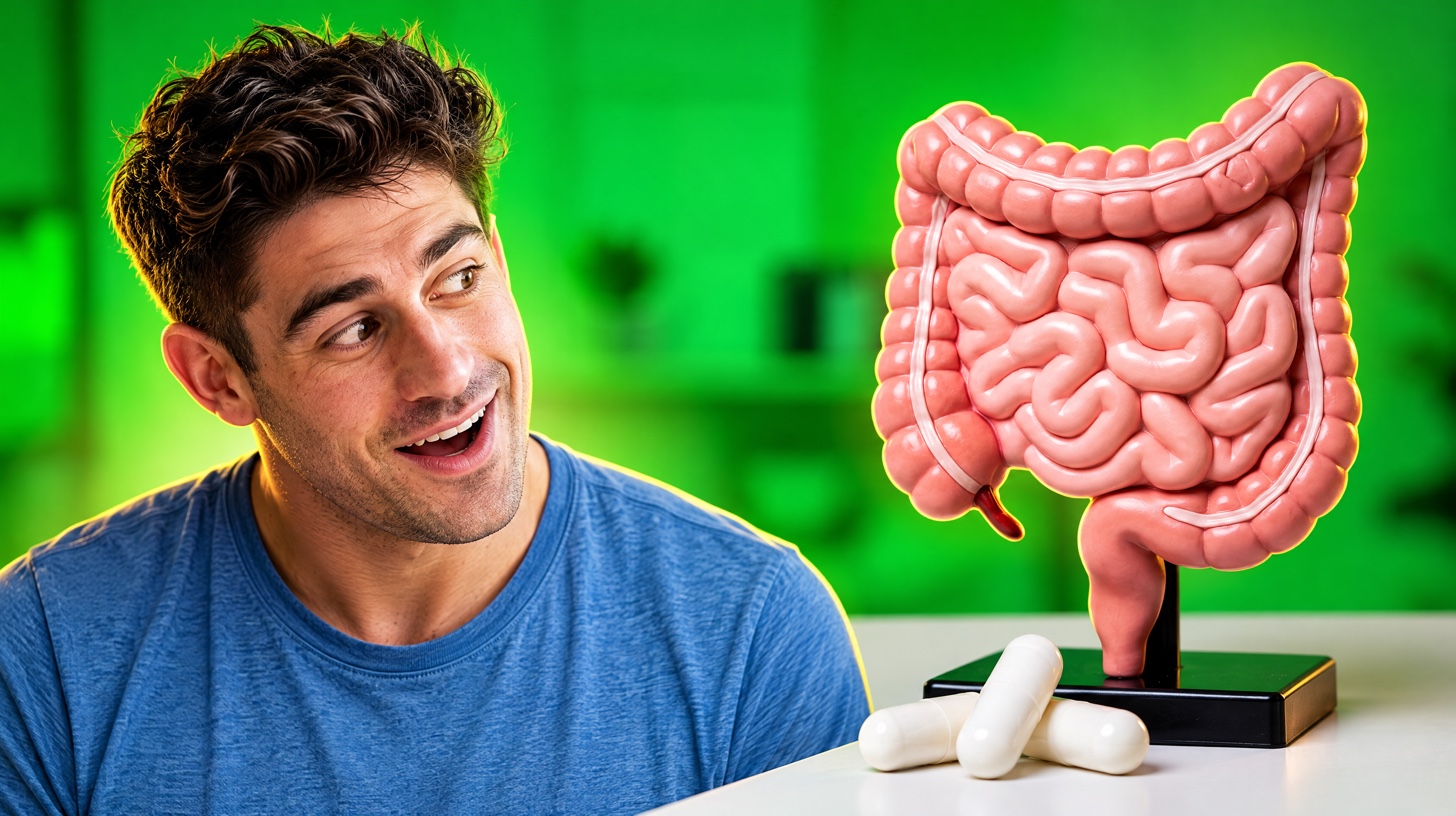
The claim: "A transplant of a healthy person's gut bacteria cures a gut infection that keeps coming back after antibiotics."
Our grade: Solid. In a randomized trial, donor gut bacteria cured 81% of people with recurring C. difficile, against 31% on the standard antibiotic. Two products made from gut bacteria are now FDA-approved. The proof is for this one infection; the other gut claims are ranked below.
Leo is 26, and his feed says the bacteria in his gut run his mood, his sleep, his cravings and his weight. There is a stool test kit in his shopping cart and a probiotic next to it.
Has changing someone's gut bacteria ever cured anything?
Yes, and in one case it worked so well that the trial was stopped early. In 2013 Dutch doctors gave a healthy donor's gut bacteria to 16 people with a gut infection that kept coming back, and 13 of them (81%) were cured. The standard antibiotic cured 4 of 13 (31%) [8].
That result is now an approved medicine. It is also the best proof we have that the bacteria in your gut can decide whether you are sick or well.
Where the claim came from
C. difficile is a bacterium that causes severe diarrhea. It often takes hold after antibiotics for something else have cleared out the gut's normal bacteria. In 2017 there were an estimated 223,900 cases in US hospital patients and 12,800 deaths [48].
The usual treatment is another antibiotic. It kills C. difficile, but it does nothing to bring the normal bacteria back, so the infection can return when the drug stops. In one trial it came back within 8 weeks in 40% of people treated with antibiotics alone [9].
So doctors tried the opposite: put the missing bacteria back, using stool from a healthy person.
The wider idea, that gut bacteria shape far more than digestion, reached most people through podcasts. In February 2022 Andrew Huberman told listeners that "creating the correct environment for these gut microbiota to thrive really does enhance mood and well-being" [6]. A week later, with Stanford microbiologist Justin Sonnenburg, he said these microbes "can be immensely beneficial for our health, meaning our hormonal health, our brain health, and our immune system function" [7]. He was fair about the limits: in the same sentence as the mood claim he said the studies were "mostly performed in animal models, typically mice" [6].
Donor bacteria cured 81% of patients: Solid
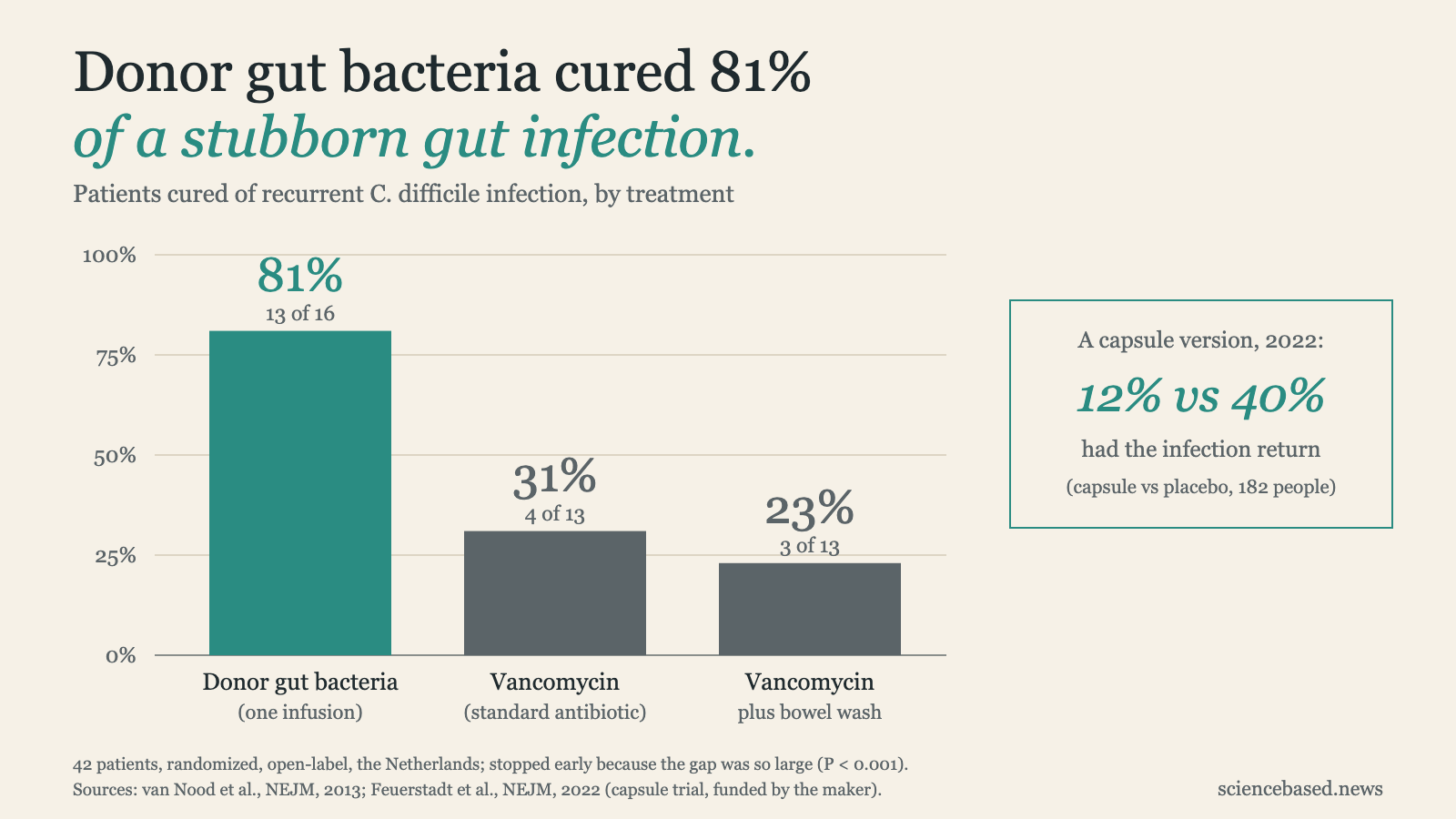
The Dutch trial randomly assigned 42 people with recurring C. difficile to three groups. One group got a healthy donor's stool, delivered through a tube to the upper small intestine. The other two got the standard antibiotic, vancomycin, with or without a bowel wash [8].
After one infusion, 13 of 16 patients (81%) were cured. The three who were not got a second infusion from a different donor, and two of them were cured. That makes 15 of 16 (94%).
Vancomycin alone cured 4 of 13 (31%), and vancomycin with a bowel wash cured 3 of 13 (23%). The trial was stopped after an early look at the results [8].
The side effects were mild diarrhea and cramps on the day of the infusion. Afterward, the patients' gut bacteria were as varied as their donors' [8].
It is now an approved medicine: Solid
A tube and a fresh donor are hard to offer to everyone, so companies turned the idea into products.
In November 2022 the FDA approved the first one, a single dose of donor bacteria given rectally. In an analysis of its two placebo-controlled trials, an estimated 70.6% of people stayed free of the infection for 8 weeks, against 57.5% on placebo [49].
Then came a capsule. In a trial of 182 people, purified gut bacteria taken by mouth cut the rate of the infection coming back from 40% to 12% [9]. In April 2023 the FDA approved it as the first gut-bacteria product taken by mouth [10]. That trial was paid for by the maker.
This tells you something important. A missing community of bacteria can make you very sick, and putting it back can make you well.
Next: helping cancer drugs work: Promising
This is the most hopeful frontier. Immune drugs for cancer work in some patients and not in others, and gut bacteria seem to be part of the reason.
In three small studies with no comparison group, 45 people with advanced melanoma got donor gut bacteria along with an immune drug, and 22 of them responded, including some whose cancer had stopped responding before [42, 43, 44]. Then came a fair test in 2026. Italian researchers randomly assigned 45 people with kidney cancer to donor bacteria or placebo on top of standard drugs. The cancer was held off for a middle value of 24.0 months with donor bacteria against 9.0 months with placebo [45]. The trial's main yardstick, the share of patients whose cancer had not grown at one year, was 70% against 41%, which narrowly missed the bar for ruling out chance.
What you can do yourself: fermented food lowers inflammation: Promising
You don't need a donor to change your gut bacteria. Food reshapes them within weeks, and one kind of food stood out in the best trial so far.
Stanford researchers assigned 36 healthy adults to eat either more fermented food or more fiber for 10 weeks [11]. The fermented-food group went from 0.4 servings a day to 6.3. The variety of their gut bacteria rose steadily, and 19 of 93 inflammation markers in their blood fell, including one called IL-6 that climbs with long-term inflammation.
The fiber group doubled its fiber, from 21.5 g to 45.1 g a day. Their variety of bacteria did not change in 10 weeks, though their bacteria made more fiber-digesting enzymes.
That doesn't make fiber a loss. In a Lancet review of 185 long-term studies, people who ate the most fiber had 15% to 30% lower death rates, with the largest benefit at 25 g to 29 g a day [12]. Nobody measured gut bacteria in those studies, so we can't say the bacteria are the reason.
It runs the other way too: your bacteria decide what you get out of food. Pomegranates and walnuts contain no urolithin A, a compound sold for muscle and heart health. Gut bacteria make it from those foods, and about 1 in 10 people make none at all [46]. When 100 adults drank pomegranate juice, only about 40% had a meaningful level in their blood the next day [47]. Our urolithin A evidence check has the rest.
The Stanford trial had limits. It was small, it had no group that ate as usual, and the result it was designed to test, a combined immune score, did not change in either group. The fall in inflammation markers was a secondary result [11]. The fiber figures come mostly from studies that watch what people already eat, plus 58 trials with 4,635 adults that measured things like weight and cholesterol [12].
Antibiotics leave a mark. Twelve healthy men took three strong antibiotics for 4 days. Their gut bacteria were mostly back within 1.5 months, but 9 common species were still missing in most of them after 180 days [13]. In a small Israeli study of healthy volunteers, taking a probiotic after antibiotics delayed the return of people's own bacteria compared with taking nothing; no health outcome was measured [14]. Take antibiotics when you need them. This is a reason not to take them when you don't.
Home stool tests are not ready. Scientists at the US standards agency NIST mixed one stool sample until it was uniform and mailed it to seven testing companies, three kits each. The reports listed anywhere from 34 to 906 kinds of bacteria, and only 3 kinds appeared in every report. One company called the same sample healthy twice and unhealthy once. Three of the seven said C. difficile was present and four said it was not [15]. A panel of 69 experts from 18 countries concluded there is "insufficient evidence to widely recommend the routine use of microbiome testing in clinical practice" [16].
The limits: one infection, and screened donors only
The proof is for one infection. Both approved products are for adults whose C. difficile has already come back, to stop the next round after antibiotics [10, 49].
The first trial was small, 42 people, and everyone in it knew which treatment they got [8]. The capsule trial was paid for by its maker [9]. The first approved product had a smaller edge, 70.6% against 57.5% [49].
Donor stool can carry harm as well as help. In 2019 two people with weak immune systems got a drug-resistant E. coli infection from transplants made from the same donor's stool, which had not been tested for it. One of them died [50]. After that, the FDA required donor stool to be tested for such bacteria, and the approved products come from screened donors. Even so, the FDA says a product made from human stool may carry a risk of passing on an infection [49].
That is why a transplant is something a doctor does, never something to try at home.
How the other gut claims rank
A cure for one infection does not prove the rest of what Leo's feed says. Here are ten gut claims, ranked by how good the human evidence is, best first.
| Claim | Best human evidence | What it showed | Grade |
|---|---|---|---|
| Cures a stubborn gut infection (C. difficile) | 2 randomized trials, 2 approved products | 81% cured with donor bacteria against 31% with the standard antibiotic | A Solid |
| Lowers inflammation | 1 trial of 36 adults, 10 weeks | Fermented foods lowered 19 of 93 inflammation markers | B Promising |
| Helps cancer immune drugs work | 1 randomized trial of 45 people, 3 small uncontrolled studies | Kidney cancer held off for 24.0 months against 9.0 | B Promising |
| Lifts mood | 72 pooled probiotic trials, mostly small | A moderate drop in depression scores; trial quality was low | B Promising |
| Steadies blood sugar | 2 small transplant trials, 2 trials of one bacterium | Better insulin response at 6 weeks, gone by 18 weeks | C Weak |
| Improves sleep | 14 pooled trials | People rated sleep slightly better; trackers showed no change | C Weak |
| Raises energy | 1 trial of 463 people with long COVID | About twice the odds of fatigue easing; not yet repeated | C Weak |
| Balances hormones | 1 study of 51 people, 46 pooled cortisol trials | Links only, and a small cortisol drop of low certainty | C Weak |
| Drives cravings | Mice, and a theory paper | No human trial has tested it | D Unproven |
| Transplants cause weight loss | 3 randomized trials, 133 people | No weight loss in any of them | F Debunked |
The first three are covered above. The rest follow.
The animal work behind them is real and striking. Mice raised with no bacteria at all, then given gut bacteria from an obese human twin, gained more fat than mice given bacteria from the lean twin [32]. The question for each claim is whether the same thing happens in people.
Mood: Promising
Mood has the most trials, and they lean positive. A 2025 review pooled 72 randomized trials of probiotics and similar supplements. Depression scores fell by a moderate amount compared with placebo, but the authors warned of "high heterogeneity and limited methodological quality", meaning the trials disagreed with each other and many were weak [17].
The individual trials point both ways. In London, 49 people on antidepressants added a probiotic or a placebo for 8 weeks; the probiotic group ended with lower depression scores, 8.83 against 11.09, in a pilot study [18]. A Swedish trial of 75 people found no effect on any measure [19]. In a 2026 Chinese trial, 60 people with depression got capsules of donor gut bacteria or placebo on top of their usual drug. At 2 weeks, 30% of the transplant group had responded against 6.7%. At 8 weeks, 43.3% were in remission against 26.7%, a gap that could have been chance, so the trial missed its main goal. The capsule maker helped fund it [20]. Behind all this is a Belgian study of 1,054 people in which two groups of gut bacteria were scarcer in people with depression [21]. That shows a link, not which came first.
Sleep: Weak
A review of 14 trials found that people on probiotics rated their sleep 0.78 points better on a 21-point questionnaire. Sleep measured by devices did not change [22].
Energy: Weak
People with chronic fatigue syndrome (106 patients against 91 healthy people) had less of a bacterium that makes butyrate, a fuel for the gut lining [23]. But a transplant trial in 11 patients "did not relieve symptoms" [24]. The best news is from Hong Kong: 463 people with long COVID took a mix of bacteria and fiber or a placebo for 6 months, and the odds of fatigue easing were about twice as high on the mix [25]. One trial in one condition needs repeating. The famous "marathon runner bacteria" study found a microbe in 15 runners, but the performance test was in 32 mice, which ran 13% longer [26].
Hormones: Weak
In 51 people, those with a wider variety of gut bacteria had higher estrogen levels if they were men or women past menopause. In younger women the two were not related [27]. A pooled analysis of 46 trials with 3,516 people found probiotics lowered the stress hormone cortisol a little, and rated the certainty low [28]. For testosterone there are only studies that observe links.
Cravings: Unproven
The idea that bacteria steer what you want to eat started as a 2014 theory paper with no data [29]. Mice given different sets of gut bacteria did choose different foods [30]. No human trial has changed gut bacteria and measured cravings. The nearest thing tested a substance bacteria make from fiber: 60 overweight adults who took 10 g a day for 24 weeks gained less weight [31].
Weight loss from a transplant: Debunked
Three randomized trials gave people with obesity gut bacteria from lean donors: 22 adults, 24 adults and 87 teenagers [33, 34, 35]. None lost weight. A pooled analysis of 9 trials with 303 people also found no difference in weight [36]. One newer idea looks better. In a 2026 trial of 90 adults who had just dieted, a daily heat-treated bacterium called Akkermansia cut weight regain over 24 weeks to 1.2 kg (2.6 pounds) against 3.2 kg (7.1 pounds) on placebo [37].
Blood sugar: Weak
In two small Dutch trials in men, bacteria from lean donors improved how well the body responded to insulin after 6 weeks, and in the larger one, with 38 men, the effect was gone by 18 weeks [38, 39]. Akkermansia improved insulin response by about 29% in a trial that 32 people finished [40], then showed no overall benefit in 58 people with type 2 diabetes [41].
Why there is more to come
Only 28.7% of the ocean floor has been mapped to modern standards [1]. Your gut is a place like that. It holds about 38 trillion bacteria, roughly one for each of your own cells, and together they weigh about 0.2 kg (half a pound) [2]. You have fewer than 20,000 genes [4]. A catalog built from 1,267 people's gut bacteria found 9.9 million [3]. Of 4,644 gut species now on record, more than 70% have never been grown in a lab, and 40% of their proteins do things nobody can yet name [5].
So this is an early map, and the first well-charted piece of coast is a cure.
So back to Leo. Yes, changing gut bacteria has cured a disease, in a trial clear enough to be stopped early. For him, the jars of kimchi and the beans are the part of that story he can use today, and the stool test can wait.
Our grade
| Claim | Evidence | Grade |
|---|---|---|
| Donor gut bacteria cure recurring C. difficile better than the standard antibiotic | Randomized trial of 42 people: 81% against 31%, stopped early | Solid |
| A gut-bacteria product keeps the infection from coming back | Randomized, placebo-controlled trials: 12% against 40% returning in 182 people; 70.6% against 57.5% staying well in two more | Solid |
| Donor bacteria help cancer immune drugs | 1 randomized trial of 45 that narrowly missed its main goal; 3 uncontrolled studies of 45 | Promising |
| Fermented foods lower inflammation | 1 randomized trial, 36 adults, 10 weeks; a secondary result | Promising |
| Overall: a transplant of healthy gut bacteria cures a gut infection that keeps coming back | Randomized trials that agree, and two FDA-approved products | Solid |
The grades for mood, sleep, energy, hormones, cravings, weight and blood sugar are in the ranking table above.
The case for the other side: the first trial had 42 people and no blinding, and trials stopped early tend to show a bigger effect than later ones do.
The two product trials were run by the makers, and one showed a much smaller edge than the other.
And one cure does not carry over to other conditions. The same transplant caused no weight loss in three trials.
What would change the grade: a large independent trial finding no benefit would lower it. A second randomized cancer trial that meets its main goal would raise that row to Solid.
What this means for you
- If C. difficile has come back after antibiotics, ask your doctor about the approved gut-bacteria treatments. Do not try a transplant at home; donor stool has to be screened [50].
- Eat fermented foods daily. The trial used about 6 servings a day of yogurt, kefir, kimchi, sauerkraut and kombucha, built up over 4 weeks [11]. Pick ones sold cold with live cultures. If your immune system is weak, ask your doctor first.
- Eat 25 to 29 g of fiber a day from beans, oats, vegetables, fruit and nuts [12]. Our five health levers article covers the fiber evidence.
- Take antibiotics only when you need them, and finish them when you do. Some gut species were still missing 180 days later [13].
- Hold off on home stool tests. The same sample got very different reports [15].
- If you have depression, a probiotic is a low-risk thing to add to your treatment and a poor thing to replace it with [17, 19].
- Know that your gut bacteria change what you get from some foods. They decide whether pomegranate gives you any urolithin A.
In the 2013 trial, how many people with recurring C. difficile were cured by one infusion of donor gut bacteria?
Donor bacteria cured 13 of 16 patients, the antibiotic 4 of 13, and two gut-bacteria products are now approved.
In the Stanford trial, which diet raised the variety of gut bacteria in 10 weeks?
The fermented-food group's variety rose and 19 inflammation markers fell; the fiber group's variety did not change.
Seven companies tested the same stool sample. What happened?
Only 3 kinds appeared in every report, and one company called the same sample both healthy and unhealthy.
What happened when people with obesity got gut bacteria from lean donors?
Three randomized trials with 133 people found no weight loss. The cure is proven for one infection so far.
What's next
Larger trials of donor bacteria with cancer immune drugs are under way, and they are the ones to watch. We'll update this page when they report.
Next in this series: a new study on what sugar does to your gut bacteria while you're on antibiotics, then fermented foods and home stool tests on their own.
For a case where a supplement changed a blood number without changing how people felt, see NAD boosters.
Was this helpful?
Sources
Show all sources (50)
- GEBCO. Release of the GEBCO_2026 Grid. April 2026. 28.7% of the ocean floor mapped to modern standards. gebco.net/news/release-gebco2026-grid
- Sender R, Fuchs S, Milo R. Revised Estimates for the Number of Human and Bacteria Cells in the Body. PLoS Biology, 2016. A calculation for a 70 kg reference man, not a trial. doi.org/10.1371/journal.pbio.1002533
- Li J, Jia H, Cai X, et al. An integrated catalog of reference genes in the human gut microbiome. Nature Biotechnology, 2014. 1,267 gut samples from three continents, 9,879,896 genes. doi.org/10.1038/nbt.2942
- Amaral P, Carbonell-Sala S, De La Vega FM, et al. The status of the human gene catalogue. Nature, 2023. Review. doi.org/10.1038/s41586-023-06490-x
- Almeida A, Nayfach S, Boland M, et al. A unified catalog of 204,938 reference genomes from the human gut microbiome. Nature Biotechnology, 2021. 4,644 gut species. doi.org/10.1038/s41587-020-0603-3
- Huberman A. How to Enhance Your Gut Microbiome for Brain & Overall Health. Huberman Lab, February 28, 2022. hubermanlab.com
- Huberman A, Sonnenburg J. Dr. Justin Sonnenburg: How to Build, Maintain & Repair Gut Health. Huberman Lab, March 7, 2022. hubermanlab.com
- van Nood E, Vrieze A, Nieuwdorp M, et al. Duodenal infusion of donor feces for recurrent Clostridium difficile. New England Journal of Medicine, 2013. 42 patients in three groups (16, 13, 13), randomized, open-label, 10 weeks, stopped early. Public funding. doi.org/10.1056/NEJMoa1205037
- Feuerstadt P, Louie TJ, Lashner B, et al. SER-109, an Oral Microbiome Therapy for Recurrent Clostridioides difficile Infection. New England Journal of Medicine, 2022. 182 people, randomized, double-blind, placebo-controlled, 8 weeks. Funded by Seres Therapeutics, the maker. doi.org/10.1056/NEJMoa2106516
- US Food and Drug Administration. FDA Approves First Orally Administered Fecal Microbiota Product for the Prevention of Recurrence of Clostridioides difficile Infection. April 26, 2023. fda.gov
- Wastyk HC, Fragiadakis GK, Perelman D, et al. Gut-microbiota-targeted diets modulate human immune status. Cell, 2021. 36 healthy adults, randomized to two diets, 10 weeks, no usual-diet group. doi.org/10.1016/j.cell.2021.06.019
- Reynolds A, Mann J, Cummings J, et al. Carbohydrate quality and human health: a series of systematic reviews and meta-analyses. Lancet, 2019. 185 prospective studies and 58 trials with 4,635 adults. doi.org/10.1016/S0140-6736(18)31809-931809-9)
- Palleja A, Mikkelsen KH, Forslund SK, et al. Recovery of gut microbiota of healthy adults following antibiotic exposure. Nature Microbiology, 2018. 12 healthy men, no control group, 180 days. doi.org/10.1038/s41564-018-0257-9
- Suez J, Zmora N, Zilberman-Schapira G, et al. Post-Antibiotic Gut Mucosal Microbiome Reconstitution Is Impaired by Probiotics and Improved by Autologous FMT. Cell, 2018. Mice and 46 healthy volunteers across its human studies; no health outcome. doi.org/10.1016/j.cell.2018.08.047
- Servetas SL, Gierz KS, Hoffmann D, et al. Evaluating the analytical performance of direct-to-consumer gut microbiome testing services. Communications Biology, 2026. One stool standard sent to 7 companies, 3 kits each. By NIST. doi.org/10.1038/s42003-025-09301-3
- Porcari S, Mullish BH, Asnicar F, et al. International consensus statement on microbiome testing in clinical practice. Lancet Gastroenterology & Hepatology, 2025. 69 experts from 18 countries. doi.org/10.1016/S2468-1253(24)00311-X00311-X)
- Zhang J, Zhu L, Meng Q, et al. The efficacy of probiotics, prebiotics, and synbiotics on anxiety, depression, and sleep: a systematic review and meta-analysis of randomized controlled trials. BMC Psychiatry, 2025. 72 randomized trials. doi.org/10.1186/s12888-025-07644-z
- Nikolova VL, Cleare AJ, Young AH, et al. Acceptability, Tolerability, and Estimates of Putative Treatment Effects of Probiotics as Adjunctive Treatment in Patients With Depression. JAMA Psychiatry, 2023. 49 people, randomized, double-blind, placebo-controlled pilot, 8 weeks. doi.org/10.1001/jamapsychiatry.2023.1817
- Söderberg Veibäck G, Lindahl J, Suneson K, et al. Add-on probiotics for inflammatory depression: a double-blind randomized placebo-controlled trial. Brain, Behavior, and Immunity, 2025. 75 people, 8 weeks. doi.org/10.1016/j.bbi.2025.06.002
- Li J, Wang Y, Li R, et al. Adjunctive fecal microbiota transplantation for major depressive disorder: A randomized, double-blind, placebo-controlled trial. Cell Host & Microbe, 2026. 60 people, 8 weeks. Part-funded by Shenzhen JCY Biotech, the capsule maker. doi.org/10.1016/j.chom.2026.05.017
- Valles-Colomer M, Falony G, Darzi Y, et al. The neuroactive potential of the human gut microbiota in quality of life and depression. Nature Microbiology, 2019. 1,054 people, observational. doi.org/10.1038/s41564-018-0337-x
- Irwin C, McCartney D, Desbrow B, et al. Effects of probiotics and paraprobiotics on subjective and objective sleep metrics: a systematic review and meta-analysis. European Journal of Clinical Nutrition, 2020. 14 studies. doi.org/10.1038/s41430-020-0656-x
- Guo C, Che X, Briese T, et al. Deficient butyrate-producing capacity in the gut microbiome is associated with bacterial network disturbances and fatigue symptoms in ME/CFS. Cell Host & Microbe, 2023. 106 patients and 91 healthy people, observational. doi.org/10.1016/j.chom.2023.01.004
- Salonen T, Jokinen E, Satokari R, et al. Randomized, double-blinded, placebo-controlled pilot study: efficacy of faecal microbiota transplantation on chronic fatigue syndrome. Journal of Translational Medicine, 2023. 11 patients. doi.org/10.1186/s12967-023-04227-y
- Lau RI, Su Q, Lau ISF, et al. A synbiotic preparation (SIM01) for post-acute COVID-19 syndrome in Hong Kong (RECOVERY): a randomised, double-blind, placebo-controlled trial. Lancet Infectious Diseases, 2024. 463 people, 6 months. Public and charity funding. doi.org/10.1016/S1473-3099(23)00685-000685-0)
- Scheiman J, Luber JM, Chavkin TA, et al. Meta-omics analysis of elite athletes identifies a performance-enhancing microbe that functions via lactate metabolism. Nature Medicine, 2019. 15 marathon runners, 10 controls, and 32 mice. Three authors hold equity in FitBiomics. doi.org/10.1038/s41591-019-0485-4
- Flores R, Shi J, Fuhrman B, et al. Fecal microbial determinants of fecal and systemic estrogens and estrogen metabolites: a cross-sectional study. Journal of Translational Medicine, 2012. 51 people, observational. doi.org/10.1186/1479-5876-10-253
- Jain M, Anand A, Sharma N, et al. Effect of Probiotics Supplementation on Cortisol Levels: A Systematic Review and Meta-Analysis. Nutrients, 2024. 46 randomized trials, 3,516 people. doi.org/10.3390/nu16203564
- Alcock J, Maley CC, Aktipis CA. Is eating behavior manipulated by the gastrointestinal microbiota? Evolutionary pressures and potential mechanisms. BioEssays, 2014. A hypothesis paper, no new data. doi.org/10.1002/bies.201400071
- Trevelline BK, Kohl KD. The gut microbiome influences host diet selection behavior. PNAS, 2022. Mice. doi.org/10.1073/pnas.2117537119
- Chambers ES, Viardot A, Psichas A, et al. Effects of targeted delivery of propionate to the human colon on appetite regulation, body weight maintenance and adiposity in overweight adults. Gut, 2015. 60 overweight adults, randomized, 24 weeks. doi.org/10.1136/gutjnl-2014-307913
- Ridaura VK, Faith JJ, Rey FE, et al. Gut microbiota from twins discordant for obesity modulate metabolism in mice. Science, 2013. Mice given human twins' gut bacteria. doi.org/10.1126/science.1241214
- Allegretti JR, Kassam Z, Mullish BH, et al. Effects of Fecal Microbiota Transplantation With Oral Capsules in Obese Patients. Clinical Gastroenterology and Hepatology, 2020. 22 adults, randomized, placebo-controlled. doi.org/10.1016/j.cgh.2019.07.006
- Yu EW, Gao L, Stastka P, et al. Fecal microbiota transplantation for the improvement of metabolism in obesity: The FMT-TRIM double-blind placebo-controlled pilot trial. PLoS Medicine, 2020. 24 adults. doi.org/10.1371/journal.pmed.1003051
- Leong KSW, Jayasinghe TN, Wilson BC, et al. Effects of Fecal Microbiome Transfer in Adolescents With Obesity: The Gut Bugs Randomized Controlled Trial. JAMA Network Open, 2020. 87 teenagers, randomized, double-blind. doi.org/10.1001/jamanetworkopen.2020.30415
- Qiu B, Liang J, Li C. Effects of fecal microbiota transplantation in metabolic syndrome: A meta-analysis of randomized controlled trials. PLoS One, 2023. 9 trials, 303 people. doi.org/10.1371/journal.pone.0288718
- Mount S, Canfora EE, Jocken JW, et al. Pasteurized Akkermansia muciniphila MucT for weight loss maintenance in people with overweight and obesity: a controlled randomized trial. Nature Medicine, 2026. 90 adults, 8-week diet then 24 weeks on the bacterium or placebo. doi.org/10.1038/s41591-026-04394-7
- Vrieze A, Van Nood E, Holleman F, et al. Transfer of intestinal microbiota from lean donors increases insulin sensitivity in individuals with metabolic syndrome. Gastroenterology, 2012. A small randomized trial in men, 6 weeks. doi.org/10.1053/j.gastro.2012.06.031
- Kootte RS, Levin E, Salojärvi J, et al. Improvement of Insulin Sensitivity after Lean Donor Feces in Metabolic Syndrome Is Driven by Baseline Intestinal Microbiota Composition. Cell Metabolism, 2017. 38 men, randomized, 18 weeks. doi.org/10.1016/j.cmet.2017.09.008
- Depommier C, Everard A, Druart C, et al. Supplementation with Akkermansia muciniphila in overweight and obese human volunteers: a proof-of-concept exploratory study. Nature Medicine, 2019. 32 people finished, randomized, placebo-controlled, 3 months. doi.org/10.1038/s41591-019-0495-2
- Zhang Y, Liu R, Chen Y, et al. Akkermansia muciniphila supplementation in patients with overweight/obese type 2 diabetes: Efficacy depends on its baseline levels in the gut. Cell Metabolism, 2025. 58 people, randomized, placebo-controlled. doi.org/10.1016/j.cmet.2024.12.010
- Baruch EN, Youngster I, Ben-Betzalel G, et al. Fecal microbiota transplant promotes response in immunotherapy-refractory melanoma patients. Science, 2021. 10 patients, no control group; 3 responded. doi.org/10.1126/science.abb5920
- Davar D, Dzutsev AK, McCulloch JA, et al. Fecal microbiota transplant overcomes resistance to anti-PD-1 therapy in melanoma patients. Science, 2021. 15 patients, no control group; 6 benefited. doi.org/10.1126/science.abf3363
- Routy B, Lenehan JG, Miller WH Jr, et al. Fecal microbiota transplantation plus anti-PD-1 immunotherapy in advanced melanoma: a phase I trial. Nature Medicine, 2023. 20 patients, no control group; 13 responded. doi.org/10.1038/s41591-023-02453-x
- Porcari S, Ciccarese C, Heidrich V, et al. Fecal microbiota transplantation plus pembrolizumab and axitinib in metastatic renal cell carcinoma: the randomized phase 2 TACITO trial. Nature Medicine, 2026. 45 patients, randomized, double-blind, placebo-controlled. doi.org/10.1038/s41591-025-04189-2
- Selma MV, Beltrán D, Luna MC, et al. Isolation of human intestinal bacteria capable of producing the bioactive metabolite isourolithin A from ellagic acid. Front Microbiol, 2017. Lab study. doi.org/10.3389/fmicb.2017.01521
- Singh A, D'Amico D, Andreux PA, et al. Direct supplementation with urolithin A overcomes limitations of dietary exposure and gut microbiome variability in healthy adults to achieve consistent levels across the population. Eur J Clin Nutr, 2022. 100 adults drinking pomegranate juice, plus a randomized dosing study. Funded by Amazentis, which sells urolithin A. doi.org/10.1038/s41430-021-00950-1
- Centers for Disease Control and Prevention. Antibiotic Resistance Threats in the United States, 2019: Clostridioides difficile. Estimated 223,900 cases in hospitalized patients and 12,800 deaths in the US in 2017. cdc.gov/antimicrobial-resistance/media/pdfs/clostridioides-difficile-508.pdf
- US Food and Drug Administration. FDA Approves First Fecal Microbiota Product. News release, November 30, 2022. Rebyota, a single rectal dose for adults; analysis of two randomized, placebo-controlled trials: 70.6% against 57.5% free of recurrence at 8 weeks. web.archive.org/fda.gov
- DeFilipp Z, Bloom PP, Torres Soto M, et al. Drug-resistant E. coli bacteremia transmitted by fecal microbiota transplant. New England Journal of Medicine, 2019. 2 patients who got stool from the same donor; one died. doi.org/10.1056/NEJMoa1910437
Discussion