

Ozempic doesn't eat your muscle any faster than a diet does
Evidence check, September 27, 2026
The claim: "About 40% of the weight you lose on a GLP-1 drug is muscle."
Our grade: Not supported. About a quarter to two-fifths of the weight lost is "lean mass", which is only about half muscle, and trials show the loss is in line with any weight loss of the same size. The real risk is for older, inactive people, and lifting weights is the best-tested fix.
Your friend has lost 30 pounds on Ozempic. At dinner someone leans over and says, "You know 40% of that is muscle, right?" The table goes quiet. Your friend puts down their fork.
You've probably heard some version of this. "Ozempic face." "Ozempic butt." Skinny-fat. The idea is that GLP-1 drugs, the class that includes semaglutide (Ozempic, Wegovy) and tirzepatide (Mounjaro, Zepbound), melt your muscle along with your fat. And muscle matters. It keeps you strong, steady on your feet and able to handle blood sugar as you age.
Where the claim came from
The number is real. It's the label that's off.
In February 2023, Peter Attia wrote about the body scans from STEP 1, the big semaglutide trial. In a subgroup that had DXA scans (a low-dose X-ray that splits your body into fat, bone and everything else), about 39% of the weight lost was lean mass. In SUSTAIN 8, a trial in people with diabetes, it was about 40%. Attia called it "an alarming proportion." Many people repeated his number as "40% muscle."
The concern was fair. These drugs cut appetite hard. People on them often eat very little, and very little protein. Muscle needs both food and use to stay.
Attia himself has softened since. In an AMA episode in June 2026, he said DXA can overstate muscle loss, and that strength and function often improve on these drugs. "When patients are counseled thoroughly on how to consume protein and how to properly engage in resistance training, we're seeing very little lean mass lost," he said.
So where does the scary number go wrong? Two places. What "lean mass" means, and what we should compare it to.
What the studies found
Lean mass is not muscle
DXA doesn't measure muscle. It measures "lean mass": everything that isn't fat or bone. That includes muscle, but also water, organs, skin, and the watery tissue that holds fat itself.
A 2025 joint advisory from four US obesity and nutrition societies puts it plainly. In STEP 1, of 13.6 kg (30 pounds) lost on average, 8.3 kg was fat and 5.3 kg was lean mass. Because muscle is about half of lean mass, that means roughly 20% of the weight lost was muscle, not 40%. A 2024 review by Ian Neeland and colleagues adds that up to 15% of fat tissue is itself counted as "fat-free" by these scans. When you lose fat, some of the "lean" loss is really the tissue that held it.
The losses look like any other weight loss
The better question isn't "how much lean mass is lost?" It's "is it more than you'd lose from the same weight loss without the drug?"
Here the evidence is fairly consistent.
STEP 1's body-scan group had 140 adults with obesity, randomized to semaglutide or placebo for 68 weeks. The semaglutide group lost 15% of their weight. Fat mass fell 19.3%. Lean mass fell 9.7%. Because fat fell twice as fast as lean, the share of the body that was lean actually went up, by 3 percentage points. Their body composition got better, not worse.
The SURMOUNT-1 body-scan group had 160 adults, randomized to tirzepatide or placebo for 72 weeks. The tirzepatide group lost 21.3% of their weight: 33.9% of their fat and 10.9% of their lean mass. About three-quarters of the weight lost was fat and a quarter was lean. The placebo group, who lost a little weight with diet advice, had the same three-to-one split. People on the drug also reported better physical function on a standard questionnaire.
That one-quarter figure isn't special to drugs. Researchers call it the "quarter FFM rule": in most planned weight loss, by diet or otherwise, about 25% of what comes off is fat-free mass.
The most direct test used MRI, which can measure actual muscle volume, not just "lean." In a substudy of the SURPASS-3 trial, 246 adults with type 2 diabetes were randomized to tirzepatide or insulin for a year. The tirzepatide group lost about 10% of their weight and 0.64 liters of thigh muscle, around 6% of it. The researchers compared this with about 2,900 people from the UK Biobank, a big British health study, whose weight changed on its own. Tirzepatide users lost about as much thigh muscle as you'd expect for that much weight loss. And the fat marbled inside their muscle dropped more than expected. That fat is linked to weaker, less healthy muscle.
One caution. At the highest dose, 15 mg, muscle loss was a bit larger than expected. It's a small signal, but a real one.
Strength doesn't seem to drop
Muscle size matters less than what the muscle can do. Few trials have measured strength, which is a real gap.
The best look so far is SEMALEAN, a French study of 115 people with severe obesity (average BMI 46) who started semaglutide. 106 finished a year. They lost 13% of their weight and 18% of their fat. Lean mass fell by 3 kg in the first seven months, then stopped falling. Grip strength went up by 4.5 kg. The share of people with "sarcopenic obesity", meaning too little muscle for their size, fell from 49% to 33%. This was an observational study with no control group, so it can't prove the drug caused those gains. But it's the opposite of what you'd see if the drug were wasting muscle.
Exercise helps
In a Danish trial published in the New England Journal of Medicine in 2021, 195 adults with obesity first lost about 13 kg on a low-calorie diet. They were then randomized for a year to placebo, exercise, liraglutide (an older GLP-1 drug), or exercise plus liraglutide. The exercise was mostly vigorous cardio, about 2.5 sessions a week. The combination group lost about twice as much body fat percentage as either one alone, and kept their lean mass. Exercise alone increased lean mass.
That trial used an older drug and mostly cardio, not weights. No large trial has yet tested a structured lifting program alongside semaglutide or tirzepatide. But in diet-based weight loss, strength training is well established to protect muscle. The 2025 joint advisory recommends it for everyone on these drugs.
Our grade
| Claim | Evidence | Grade |
|---|---|---|
| You lose some lean mass on GLP-1 drugs | Body scans in several randomized trials, 140 to 246 people each | Solid |
| About 40% of the weight lost is muscle | The 40% is lean mass; muscle is about half of that | Not supported |
| GLP-1s cost more muscle than other weight loss of the same size | Two randomized substudies (160 and 246 people) and one MRI comparison say no | Not supported |
| The muscle lost makes you weaker | Few strength measures; one observational study (106 people) found grip strength rose | Weak |
| Lifting and eating enough protein protect your muscle on these drugs | One randomized trial with an older drug (195 people); strong evidence from diet-only weight loss | Promising |
There's a fair case for the other side. Almost all of this evidence comes from trials run or paid for by Novo Nordisk and Eli Lilly, which make these drugs. The body-scan groups were small parts of larger trials. The average participant was in their 40s or 50s. We have little data on people over 70 or people who are already frail, and for them any muscle loss is riskier. And the trials lasted a year or so. We don't know what happens after five years on the drug, or after stopping and regaining fat but not muscle.
What would change the grade: a large trial that measures strength, walking speed and falls in older adults on these drugs, or long-term data showing muscle doesn't come back.
What this means for you
If you're taking a GLP-1 drug or thinking about it, here is how this changes what you do.
Don't skip the drug out of fear of muscle loss. If a doctor has recommended it, the evidence says the muscle you lose is about what you'd lose from any diet that took off the same weight. Carrying extra fat, especially around the belly, carries its own well-proven risks.
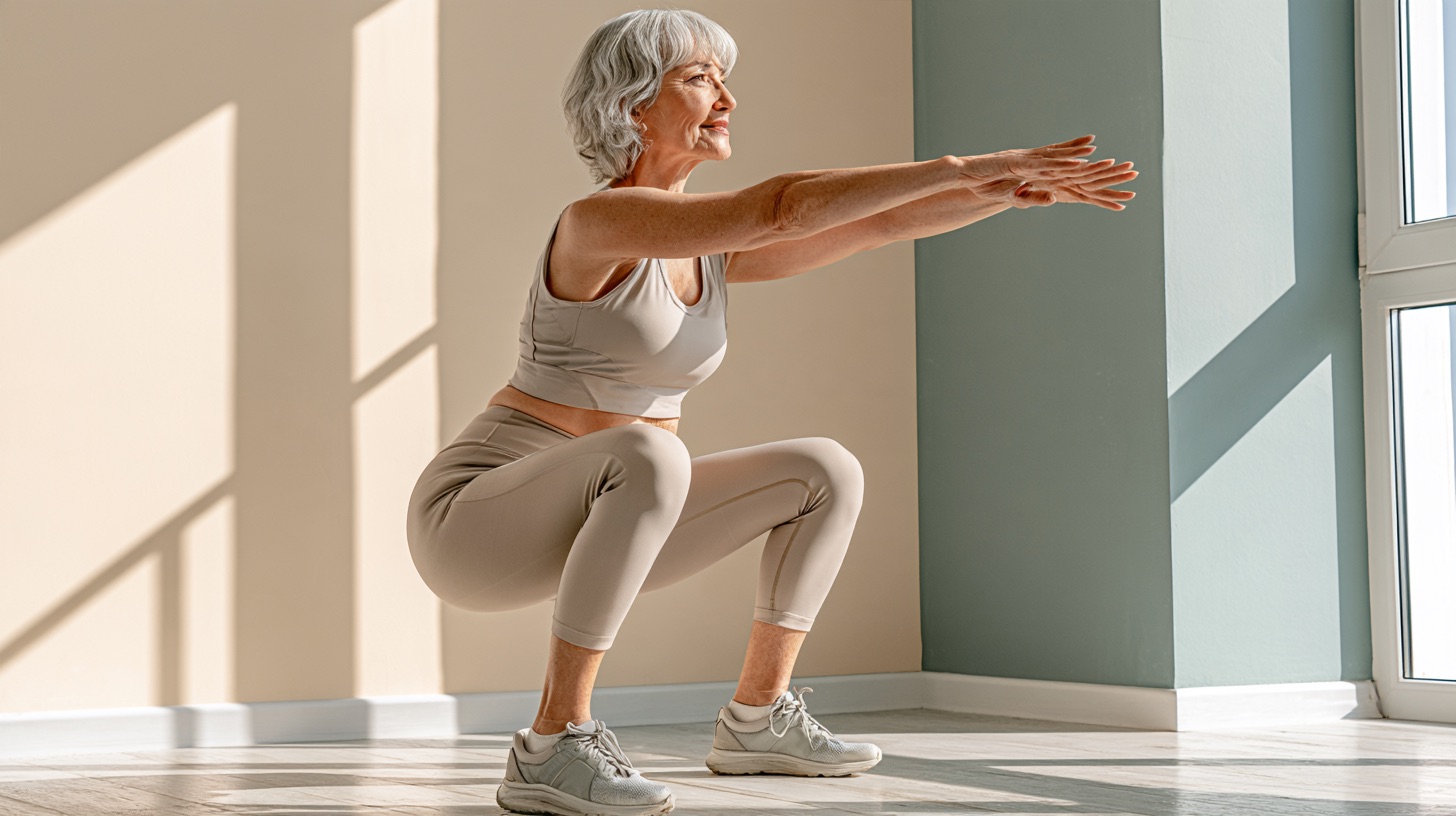
Lift weights. This is the single most useful step. The 2025 joint advisory recommends strength training at least three times a week, plus at least 150 minutes a week of moderate cardio like brisk walking. Squats, push-ups, rows and carrying heavy things all count. If you've never lifted, a few sessions with a trainer are money well spent.
Eat protein first. These drugs make you full fast, so eat the protein part of your meal before the rest. The advisory suggests 1.2 to 1.6 grams per kilogram of body weight a day during weight loss, or a simple target of 80 to 120 grams a day. Eggs, fish, chicken, Greek yogurt, beans and tofu all work. The same advisory stresses that extra protein alone isn't enough without strength training.
Watch the real warning signs, not the scale. Weakness climbing stairs, trouble getting out of a chair, or a weaker grip are more meaningful than a DXA number. If you're over 65 or already frail, ask your doctor about a strength check before starting and a slower dose increase.
Don't buy "muscle-sparing" supplements marketed at GLP-1 users. None has good trial evidence in people on these drugs.
What's next
Drug makers are testing add-on drugs that protect muscle during weight loss. The furthest along is bimagrumab, an antibody that blocks a brake on muscle growth. In the BELIEVE trial, presented in June 2025, 507 adults got semaglutide, bimagrumab, both, or placebo. On semaglutide alone, 71.8% of the weight lost was fat. With both drugs, 92.8% was fat. It's an early-stage trial, and whether the extra muscle makes people stronger is still unknown.
Research is also underway on how these drugs affect muscle strength and function in younger people, which the current trials barely measured.
Next evidence check: what happens when you stop. A study this month linked stopping Ozempic to a higher risk of heart attack and stroke. We'll look at how solid that is, and at how much weight comes back.
You may also like our check of glucose monitors for healthy people.
Sources
- Attia P. Lean mass loss on GLP-1 receptor agonists: a downside of the "miracle drugs". peterattiamd.com, February 18, 2023. https://peterattiamd.com/the-downside-of-glp-1-receptor-agonists/
- Attia P. AMA #86. The Peter Attia Drive, June 29, 2026. https://peterattiamd.com/ama86
- Mozaffarian D et al. Nutritional priorities to support GLP-1 therapy for obesity: a joint Advisory from the American College of Lifestyle Medicine, the American Society for Nutrition, the Obesity Medicine Association, and The Obesity Society. Am J Clin Nutr, 2025. Expert advisory. https://doi.org/10.1016/j.ajcnut.2025.04.023
- Neeland IJ, Linge J, Birkenfeld AL. Changes in lean body mass with glucagon-like peptide-1-based therapies and mitigation strategies. Diabetes Obes Metab, 2024. Review. https://doi.org/10.1111/dom.15728
- Wilding JPH et al. Impact of semaglutide on body composition in adults with overweight or obesity: exploratory analysis of the STEP 1 study. J Endocr Soc, 2021. 140 participants, randomized, 68 weeks, industry-funded. https://pmc.ncbi.nlm.nih.gov/articles/PMC8089287/
- Look M et al. Body composition changes during weight reduction with tirzepatide in the SURMOUNT-1 study of adults with obesity or overweight. Diabetes Obes Metab, 2025. 160 participants, randomized, 72 weeks, industry-funded. https://doi.org/10.1111/dom.16275
- Sattar N et al. Tirzepatide and muscle composition changes in people with type 2 diabetes (SURPASS-3 MRI). Lancet Diabetes Endocrinol, 2025. 246 participants, randomized (open-label), 52 weeks, industry-funded. https://doi.org/10.1016/S2213-8587(25)00027-0
- Alissou M et al. Impact of semaglutide on fat mass, lean mass and muscle function in patients with obesity: the SEMALEAN study. Diabetes Obes Metab, 2026. 115 participants (106 completed), observational, 12 months. https://doi.org/10.1111/dom.70141
- Lundgren JR et al. Healthy weight loss maintenance with exercise, liraglutide, or both combined. N Engl J Med, 2021. 195 participants, randomized, 1 year. https://doi.org/10.1056/NEJMoa2028198
- American Diabetes Association. New GLP-1 therapies enhance quality of weight loss by improving muscle preservation (BELIEVE trial, bimagrumab plus semaglutide). Press release, June 2025. 507 participants, randomized, phase 2b. https://diabetes.org/newsroom/press-releases/new-glp-1-therapies-enhance-quality-weight-loss-improving-muscle-0